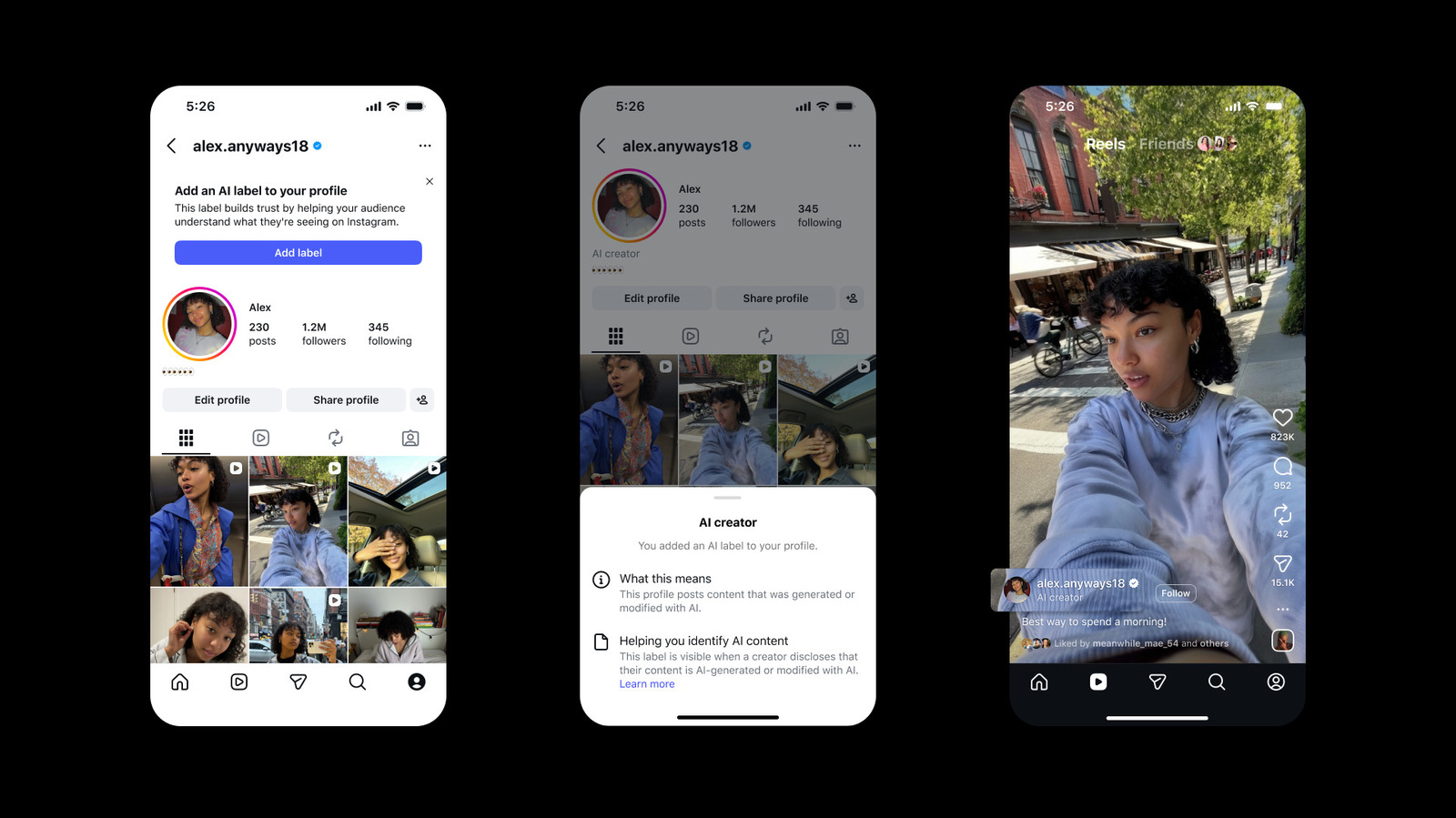
Instagram’s New AI Creator Label
Instagram has rolled out a pilot for an optional “AI creator” label that lets users flag posts as AI-generated or AI-altered. This tag is clearer than the previous “AI info” badge, signaling when artificial intelligence influenced the content. But it’s voluntary—many AI-driven posts will go unlabeled.
Meta hasn’t deployed reliable automated detection yet, so the platform depends on creators to self-identify. That leaves a big enforcement gap and raises doubts about how effective voluntary labeling can be as AI content surges. Instagram’s move shows awareness but also exposes the challenge of balancing transparency with practical oversight.
How the Label Works and Its Limits
The “AI creator” label appears as a small badge on profiles and individual posts flagged by users. Unlike Instagram’s earlier, subtler “AI info” indicator, this label is explicit about AI involvement. Launched in April 2024, it’s entirely optional—creators decide whether to use it.
Behind the scenes, Instagram lacks reliable tools to detect AI content at scale. Meta is still testing detection methods but hasn’t found one consistent enough to roll out. This means the platform leans heavily on creators’ honesty. Without mandates or technical checks, many AI posts can slip through undisclosed.
The label signals AI use but doesn’t specify which tools or how much AI shaped the content. It only applies when creators choose to mark their posts. This partial transparency contrasts with stricter policies seen elsewhere on misinformation or manipulated media.
Instagram is walking a tightrope. It wants to encourage openness around AI without alienating creators or policing content too harshly. But as AI-generated posts multiply, voluntary labeling and patchy detection will likely fall short. The limits here suggest more robust solutions—automated detection, clearer rules, or mandatory disclosure—will be needed to keep trust intact. For now, the label is a helpful but incomplete signal.
Challenges in Detecting AI Content
Detecting AI-generated content is harder than it looks. Instagram relies on users to self-report AI use, which is a big ask. Many creators might avoid admitting they used AI, especially if it affects how their content is perceived. Without reliable automated detection, the platform’s transparency depends on voluntary disclosure, leaving a large blind spot.
Automated tools exist but struggle with accuracy. AI-generated images and text can be subtle or heavily edited, blurring lines with human-made content. Some detection methods scan metadata or known AI signatures, but savvy users can remove or alter these traces. As AI improves, its output becomes even harder to spot.
The volume of daily posts compounds the problem. Manual review isn’t scalable, and false positives risk alienating genuine creators. Meta’s reluctance to enforce stricter labeling likely reflects these technical and practical challenges. For now, many AI posts will go unlabeled, complicating transparency efforts.
This gap raises a key question: how will platforms keep pace as AI content floods feeds? Detection technology must evolve fast—or platforms may have to rethink relying on self-reporting altogether. Users should know that no AI label doesn’t guarantee human authorship.
What This Means for Users and Platforms
Because labeling is voluntary, users can’t fully trust it to separate human-made from AI-generated content. Some posts will carry the label, but many won’t—even if AI played a role. That uncertainty makes judging authenticity or spotting manipulation harder, especially as AI tools become more accessible and sophisticated.
For creators, the label offers a way to signal transparency. But without enforcement or incentives, adoption may be spotty. Some might avoid labeling to preserve originality or engagement. Others may simply skip it since self-reporting is easy to ignore.
Instagram faces a tricky choice. It wants transparency without driving creators away or policing content too aggressively. But as AI posts multiply, voluntary labels won’t scale. Automated detection remains imperfect, leaving the platform open to misuse or misinformation slipping through.
Regulators may push for clearer rules or mandatory disclosures. Instagram’s pilot could inform those debates but doesn’t settle them. Meanwhile, users should treat AI-labeled content with cautious curiosity and remember many AI-influenced posts won’t be flagged.
Transparency efforts like this are a start but far from a fix. The evolving AI content landscape demands stronger tools and policies to maintain trust and clarity. Instagram’s experiment highlights the need for ongoing scrutiny, not complacency.
Potential Future Steps in AI Content Transparency

Instagram’s voluntary AI creator label is just the opening move. The platform’s dependence on user honesty exposes a glaring gap: automated detection isn’t ready. Watching if Meta invests in better AI classifiers or cross-platform verification will be telling. That could shift labeling from voluntary to enforced.
Another key question: will the label expand beyond testing? Will Instagram tie it into algorithmic ranking or moderation? The label’s optional nature leaves plenty of room for undisclosed AI posts, which could erode trust rather than build it.
Regulation could force platforms toward mandatory labeling. Governments and watchdogs are eyeing AI’s role in misinformation and authenticity. Meta’s response will show if labels stay a soft nudge or become hard rules.
User behavior also matters. If audiences demand clearer signals or penalize undisclosed AI content, platforms might tighten controls. But indifference or confusion could stall progress.
None of these outcomes are guaranteed. The patchy rollout and technical hurdles suggest Instagram’s AI labeling is still early days. The coming months will reveal if this experiment grows into a solid transparency framework or stays a tentative gesture.
Global Digests News delivers timely, credible coverage of world affairs, politics, economy, and technology to keep you informed on today’s top stories.