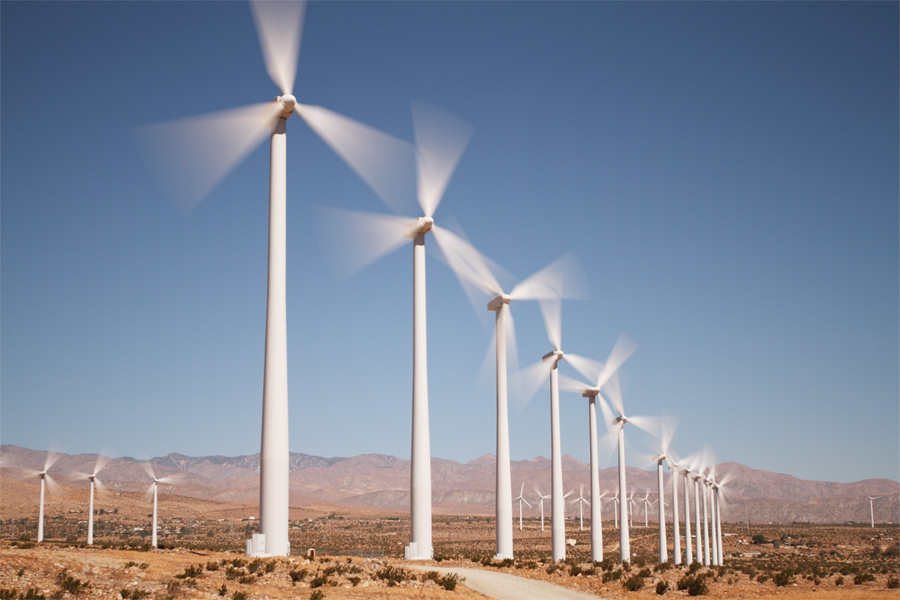
Overview of the Wind Project Approval Freeze
In a decisive move reshaping the U.S. renewable energy landscape, the Department of Defense (DoD) has imposed a freeze on the approval of approximately 165 onshore wind projects, collectively representing an estimated 30 gigawatts of potential capacity—enough to power roughly 15 million homes. Citing national security concerns, this unprecedented halt directly targets projects on private lands, igniting controversy over the balance between defense prerogatives and property rights.
This freeze is not merely an isolated procedural delay but appears to be a calculated administrative strategy, characterized by canceled meetings, unreturned communications, and stalled application processes. The implications are profound: beyond immediate project disruptions, this policy signals a broader industrial and political realignment with significant consequences for the renewable energy sector’s growth trajectory and the legal landscape surrounding energy infrastructure development.
Details of the Department of Defense's Obstruction Tactics
Background on Regulatory and Legal Challenges
Understanding the Department of Defense's (DoD) recent intervention in onshore wind project approvals requires a concise grasp of the regulatory and legal landscape that frames this issue. Historically, wind energy developments on private lands have been subject to federal oversight primarily when projects intersect with national security interests, such as radar interference or military training zones. However, the current freeze on approximately 165 projects—amounting to 30 gigawatts of potential capacity—is unprecedented in scale and scope.
Prior to this freeze, wind energy projects typically underwent a multi-agency review process involving the Department of Energy, the Federal Aviation Administration, and occasionally the DoD when security concerns arose. These reviews balanced renewable energy goals with operational safety and security mandates. The Trump administration’s invocation of national security as grounds for stalling approvals marks a notable departure from established protocols, as critics argue the rationale lacks transparency and substantive evidence.
Legally, the move intersects with complex property rights issues, given that the affected projects are situated on private lands. This raises constitutional questions about governmental overreach and the extent to which national security can justify broad regulatory halts. Previous legal challenges have focused on similar federal actions in offshore wind development, where courts have pushed back against perceived overextensions of executive authority.
In sum, the current regulatory impasse emerges against a backdrop of evolving federal policies that increasingly prioritize fossil fuel interests and industrial strategies over renewable energy expansion. This shift not only disrupts project timelines but also signals deeper tensions between national security claims, environmental objectives, and private landowner rights—an intersection that will shape ongoing legal and political debates.
Impact on Renewable Energy and Property Rights
The Department of Defense’s decision to stall approvals for 165 onshore wind projects carries significant repercussions for the renewable energy sector, property owners, and broader energy policy landscapes. By effectively halting development on private lands that could generate 30 gigawatts of clean energy—enough to power approximately 15 million homes—this freeze not only delays critical progress toward national climate goals but also injects uncertainty into a rapidly evolving market.
For industry stakeholders, the freeze disrupts investment timelines and undermines confidence in regulatory stability. Developers face increased financial risk as project pipelines are stalled indefinitely, complicating capital allocation and potentially deterring future innovation and deployment. The Department of Defense’s invocation of national security concerns—widely viewed by critics as a pretext—adds a layer of unpredictability, as the criteria for approval become opaque and subject to shifting political priorities rather than transparent technical standards.
From a property rights perspective, the freeze raises pressing questions about the balance between federal regulatory authority and private landowner autonomy. Many affected projects are situated on privately held lands where owners have pursued wind development as a means of economic diversification and sustainable land use. The administrative obstruction effectively denies these landowners the ability to realize the economic benefits of their property, intensifying tensions over governmental overreach and compensation mechanisms.
Policy-wise, this development signals a broader industrial strategy favoring fossil fuel interests at the expense of renewable energy expansion. The freeze aligns with a pattern of regulatory maneuvers that slow clean energy deployment while reinforcing legacy energy sectors, complicating the United States’ ability to meet emission reduction targets and transition to a sustainable energy future. Legal challenges currently underway may clarify the limits of such executive actions and shape the future regulatory environment.
In sum, the Department of Defense’s obstruction of these wind projects represents a pivotal moment with lasting implications. It disrupts renewable energy growth, unsettles property rights frameworks, and reflects a contentious policy shift with consequences that extend beyond the immediate projects to the country’s broader energy trajectory. Stakeholders must closely monitor ongoing legal developments and prepare for a potentially protracted contest over the future of onshore wind in the United States.
Future Outlook and Stakeholder Actions
Frequently Asked Questions About the Wind Power Freeze
The Department of Defense has invoked national security concerns as the primary rationale for delaying approvals of onshore wind projects. Officials argue that wind turbines near military installations could interfere with radar systems and compromise surveillance capabilities. However, many experts and critics view these claims as a pretext for broader political and industrial objectives rather than genuine security threats.
How many wind projects and what capacity are affected by the freeze?
The freeze impacts approximately 165 onshore wind projects across the United States, representing an estimated 30 gigawatts of potential generating capacity. This capacity is sufficient to power around 15 million homes, underscoring the significant scale of the halted developments.
What legal challenges have been raised against the Trump administration’s wind project policies?
Legal challenges have emerged in response to the administration’s obstruction tactics. Courts have previously blocked offshore wind restrictions, and similar lawsuits are anticipated regarding onshore projects. These challenges focus on allegations that the administration’s actions exceed legitimate national security concerns and infringe on property rights and environmental regulations.
How does this policy shift impact the renewable energy sector and property rights?
The freeze disrupts the growth trajectory of the renewable energy sector by delaying critical infrastructure projects and undermining investor confidence. It also raises significant concerns about property rights, as the policy effectively restricts private landowners’ ability to develop wind energy projects without clear, timely approvals, creating legal and economic uncertainty for stakeholders.

Global Digests News delivers timely, credible coverage of world affairs, politics, economy, and technology to keep you informed on today’s top stories.

Bohmian Mechanics: Revisiting Quantum Determinism After New Tests
Bohmian mechanics, once sidelined, returned to focus after a 2025 photon tunneling experiment tested its deterministic claims. The results…

Dark Matter Detection: Innovations Inspired by Henry Cavendish's Experiment
A modern take on Henry Cavendish’s 18th-century torsion balance proposes nested metal shells and ultra-sensitive voltage measurements to de…
Greenland’s Ice Melt Surges Since 1990
Greenland’s ice melt has accelerated sixfold since 1990, driven mainly by rising temperatures rather than atmospheric shifts. Extreme melt…

Health Insurance Marketplaces Leak Sensitive Data to Ad Tech Giants
Nearly all U.S. state health insurance marketplaces have exposed sensitive applicant data—including citizenship and race—to major ad tech f…

Instagram’s Voluntary AI Creator Label: A Tentative Step Toward Transparency
Instagram has launched an optional “AI creator” label for posts generated or altered by AI. Without automated detection, the system relies…

Uber’s Ambitious Expansion and Innovation
Uber CEO Dara Khosrowshahi lays out a vision to transform Uber into a travel and service platform. By integrating Expedia hotel bookings an…
Claude Code Cost Control: Context Architecture Over Prompt Optimization
Claude Code’s costs stem less from prompt length and more from accumulated context—files, memory, and tool outputs that build up each sessi…

Leonardo da Vinci’s DNA May Finally Be Decoded
Researchers have mapped a 21-generation paternal lineage from 1331 to today, identifying 15 living male descendants of Leonardo da Vinci. G…