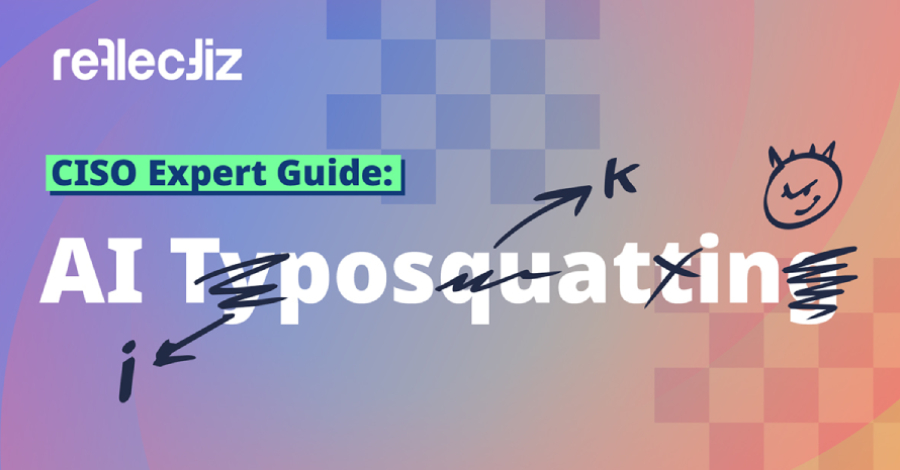
From User Typos to Supply Chain Threats

Typosquatting used to be a straightforward nuisance—users mistype a URL, land on a fake site, and maybe get phished or infected. That picture has changed dramatically. Now, attackers embed these deceptive domains deep inside third-party scripts that millions of websites rely on daily. This isn’t about a careless click anymore; it’s a supply chain threat hiding in plain sight. What’s new is how AI accelerates the game. Attackers generate countless domain variants almost instantly, slipping malicious code into popular developer tools and libraries. These trojanized scripts propagate silently, bypassing traditional perimeter defenses. The old model of blocking suspicious URLs or domains just doesn’t cut it when the threat lives inside trusted code running at runtime. The challenge has shifted from preventing user typos to detecting and controlling behavior after deployment.

AI-Powered Typosquatting Attacks on Third-Party Scripts

The latest wave of typosquatting attacks targets third-party scripts by exploiting the very trust developers place in these external resources. Instead of relying on simple user misspellings, attackers now leverage AI to churn out hundreds of domain variants that closely mimic legitimate script hosts. This flood of lookalike domains makes manual vetting impossible. Starting in early 2026, threat actors began embedding trojanized code within popular open-source packages and developer tools. These compromised packages reference malicious domains that appear benign at first glance but serve up harmful payloads during runtime. The AI-generated domains are rotated frequently, evading static blocklists and signature-based detection. Traditional defenses like firewalls and content security policies fall short because the malicious activity occurs dynamically when scripts execute in the browser or server environment. The attack vector has effectively shifted from the end user’s keyboard to the software supply chain itself. This shift complicates attribution and containment. Notably, the attackers do not need to compromise the original servers hosting the third-party scripts. Instead, they hijack package repositories or inject malicious dependencies, piggybacking on the legitimate software delivery process. This stealthy approach allows widespread distribution of infected scripts without raising immediate alarms. The timeline reveals a rapid escalation: AI-powered domain generation in January 2026, followed by the first documented supply chain compromises in March, and a surge in incidents reported by May. Each phase demonstrates increasing automation and sophistication, underscoring how AI accelerates the scale and speed of typosquatting attacks. This evolution demands a rethink of defense strategies. Static domain allowlists or IP blacklists cannot keep pace with the fluid domain landscape. Instead, continuous runtime monitoring that analyzes script behavior and network interactions is becoming essential to detect and block these AI-driven supply chain threats.

Why Traditional Defenses Fall Short

The core problem with traditional defenses lies in their design assumptions. Firewalls and content security policies (CSPs) typically rely on static rules and known signatures to block malicious domains or scripts. But typosquatting attacks have evolved past simple domain lookups. They now exploit trusted third-party scripts that dynamically load resources at runtime, often from domains that appear legitimate or vary frequently. This dynamic behavior sidesteps static allowlists and blacklists. Content security policies can restrict where scripts load resources from, but they struggle to handle the sheer volume and variability of domains generated by AI-powered typosquatting. Attackers rapidly churn out new domain variants, each slightly different, making it impractical to maintain comprehensive blocklists. Firewalls, meanwhile, focus on network-level filtering and cannot interpret the intentions behind script behavior once a connection is established. Moreover, these defenses don’t monitor what scripts actually do once loaded. A script from a trusted source might suddenly fetch malicious payloads from a typo domain, and traditional tools won’t flag that in real time. The problem intensifies because many organizations rely heavily on third-party code for functionality and speed, creating a sprawling attack surface that’s difficult to police with static measures. In short, conventional defenses lack the granularity and adaptability needed to catch these evolving threats. They’re designed to prevent known bad actors from connecting, not to analyze complex runtime behaviors or detect subtle supply chain manipulations. This gap leaves a blind spot for attackers who exploit trust relationships embedded deep in the web ecosystem.

Adapting Defenses for Runtime Threats

The shift in typosquatting tactics demands a rethink in how defenses operate. Traditional static filters and domain blocklists simply can’t keep pace with AI-generated permutations slipping into trusted third-party scripts. These scripts execute in real time within user browsers, turning the attack surface into a moving target. That means detection can’t wait for pre-deployment scanning or rely solely on domain reputation. Runtime behavioral monitoring steps into this gap. By observing script activity as it unfolds—tracking network calls, resource loads, and script modifications—security tools gain a dynamic window into suspicious patterns. This approach can catch malicious payloads that morph or activate conditionally, bypassing static signature checks. But runtime monitoring alone isn’t a silver bullet. It requires careful tuning to avoid false positives and must integrate with broader governance policies that scrutinize third-party code provenance and update cadence. For organizations, the stakes are high. Supply chain compromises erode trust and can cascade across entire ecosystems if unchecked. Security teams must adopt layered defenses that combine proactive vetting of third-party dependencies with real-time anomaly detection. This also means investing in developer education and tooling that flags risky imports before they reach production. Policy frameworks will need to evolve too, emphasizing transparency and accountability in software supply chains. Without such measures, attackers exploiting AI to automate typosquatting will continue to outmaneuver static defenses. The challenge lies in balancing agility with control—allowing innovation through third-party integrations while maintaining vigilant runtime oversight.

Strengthening Governance and Monitoring

The next signals to watch will likely come from how organizations integrate runtime behavioral monitoring with governance frameworks. As attackers exploit AI to craft ever more convincing typosquatting domains embedded in third-party scripts, static defenses will continue to lag behind. The shift toward dynamic analysis—observing script behavior in real time—promises better detection but raises questions about scalability and false positives. Expect to see advancements in automated policy enforcement that can adapt on the fly, flagging anomalous network calls or unexpected script modifications without disrupting legitimate workflows. Meanwhile, transparency around third-party dependencies will become a critical governance focus. Tools that map and continuously audit the software supply chain, combined with stricter vetting of external code, may help contain this threat vector. Open questions remain about how organizations balance security with the speed and flexibility that modern web environments demand. Will runtime monitoring become standard practice, or will it remain a specialized layer for high-risk assets? How will regulatory pressures influence governance models around third-party code? The answers will emerge as defenders experiment with new controls and attackers refine their AI-driven tactics. For now, the evolving typosquatting threat underscores that defense is no longer just about blocking known bad actors but about understanding and managing risk dynamically across complex software ecosystems.
Ссылка на первоисточник
Google I/O 2026
Cybersecurity

Google I/O 2026 Insights

The Google I/O 2026 keynotes reveal rapid advances across AI, Android, Chrome, and Cloud, exposing technical risks amid ambitious innovatio…
Polypad – The Mathematical Playground
Cybersecurity

Math Learning Tools Digest

Polypad is a free, browser-based platform offering customizable virtual math manipulatives like fraction bars, 3D polyhedra, and logic gate…