Polypad’s Interactive Edge in Math Learning
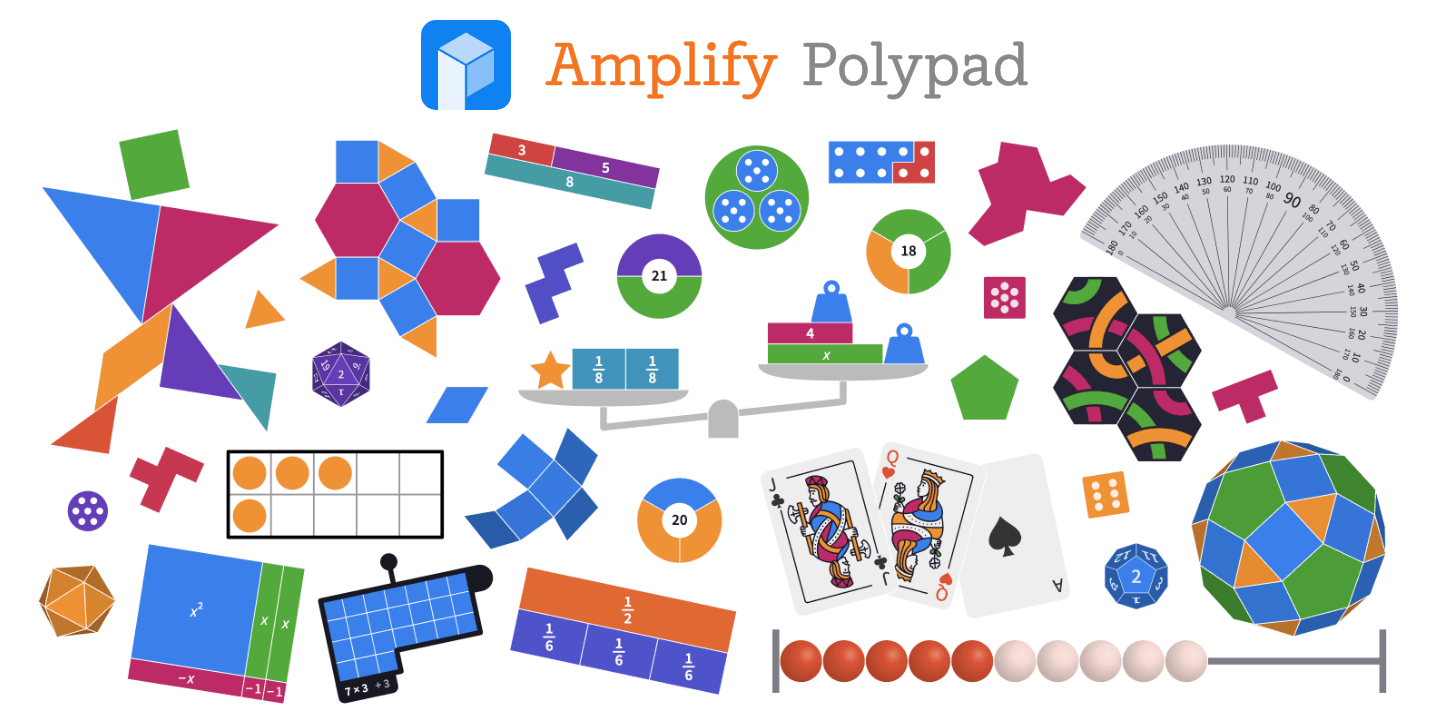
Polypad arrives as a nimble, browser-based platform that sidesteps common barriers like installation or account creation. This immediacy in access is more than convenience; it reshapes how students and educators engage with math manipulatives by removing friction points that often stall digital learning adoption. Its toolkit spans from fraction bars to 3D polyhedra and logic gates—each element customizable to fit diverse instructional needs. This breadth signals a deliberate design choice geared toward flexibility rather than a one-size-fits-all solution.
What sets Polypad apart is its seamless blend of interactive elements with curricular demands. The platform’s architecture supports layered exploration, allowing users to manipulate objects in real time and visualize abstract concepts concretely. Yet, this strength also introduces complexity: the reliance on browser performance and internet stability could hinder consistent use in less-resourced settings. Moreover, while the interface is intuitive for many, the depth of features may overwhelm novice users without guided scaffolding. Such trade-offs underscore the tension between offering rich functionality and maintaining straightforward usability—an ongoing challenge for digital learning tools aiming to serve broad educational contexts.
Core Features and User Experience
Polypad launches immediately in any modern browser, requiring no account creation or software installation—a design choice that lowers barriers to entry and encourages spontaneous use. Its interface presents a clean, grid-based workspace where users drag and drop a wide array of manipulatives. These include fraction bars, number tiles, 3D geometric solids, pattern blocks, and even logic gates, each fully interactive and customizable in size, color, and quantity. This breadth supports diverse mathematical concepts across grade levels, from elementary fractions to high school geometry and logic.
The platform’s responsiveness is notable. Actions like snapping shapes together, rotating polyhedra, or combining fraction bars happen fluidly with minimal lag, which is crucial for maintaining student engagement. Polypad also integrates a unique cross-disciplinary feature: a music interface that maps mathematical patterns to sound, aiming to deepen conceptual understanding through auditory feedback. While innovative, this feature’s educational impact lacks extensive independent validation and may distract rather than assist some learners.
Polypad’s design emphasizes exploration over rigid instruction. It provides no predefined problem sets within the workspace itself; instead, it offers downloadable lesson plans and tutorials via its website. This separation means educators must prepare or source their own guided activities to harness the tool effectively. The absence of embedded assessment tools or progress tracking limits its utility for formal evaluation or adaptive learning scenarios.
Accessibility considerations appear mixed. The platform is visually clear and supports keyboard navigation, but there is limited information on compatibility with screen readers or other assistive technologies. Given that virtual manipulatives are often used in inclusive classrooms, this gap could hinder equitable access.
Overall, Polypad’s core features deliver a versatile, user-friendly environment for hands-on math exploration. Yet, its reliance on external instructional scaffolding and limited accessibility support pose risks for consistent, inclusive educational deployment.
Potential Limitations and Considerations
Polypad’s versatility is impressive, yet it’s not without constraints that educators and developers must weigh carefully. The platform’s reliance on a browser environment means performance can vary significantly depending on hardware and internet stability. Complex 3D manipulations, for instance, might lag or render inconsistently on lower-end devices, potentially disrupting the learning flow. This raises questions about equitable access, especially in under-resourced classrooms where technology may not meet optimal specifications.
Another subtle limitation lies in the scope of interactivity. While Polypad offers a broad toolkit—from fraction bars to logic gates—the depth of customization and adaptability to diverse pedagogical approaches is still somewhat bounded. The platform’s preset manipulative designs, though extensive, may not fully accommodate unconventional teaching methods or the nuanced needs of students with varying learning styles or disabilities. This could inadvertently narrow the educational impact if users expect a one-size-fits-all solution.
Data privacy and security, often overlooked in educational tech, warrant scrutiny here as well. Polypad’s no-login model simplifies access but also limits the ability to track individual progress or personalize experiences securely. Without user accounts, it’s challenging to implement robust data protection protocols or integrate with broader learning management systems that require authenticated user data. This trade-off between ease of use and data governance might constrain adoption in environments with strict compliance requirements.
Finally, the platform’s integration with curricula is promising but not seamless. Teachers must still invest time to align Polypad’s tools with specific learning objectives and standards, which can be resource-intensive. The absence of adaptive feedback mechanisms within the tool means that educators remain responsible for interpreting student interactions and outcomes, potentially limiting scalability in large or remote classrooms.
These considerations suggest that while Polypad stands out as a flexible and accessible virtual manipulative platform, its practical deployment should be approached with a clear understanding of technical, pedagogical, and administrative boundaries.
Assessing Polypad’s Role in Math Education
Polypad stands out as a flexible, no-barrier entry point into interactive math learning, especially appealing for classrooms with limited tech resources. Its zero-install, browser-based design removes common friction, making it instantly accessible. The range of manipulatives—from fraction bars to 3D shapes and logic gates—offers concrete ways to visualize abstract concepts, which is a proven aid in comprehension. Yet, this versatility comes with caveats. The platform’s reliance on user self-direction means students without sufficient guidance may struggle to translate manipulative interaction into deeper mathematical understanding. Educators need to weigh how Polypad fits within their instructional framework and whether supplementary explanation is necessary to avoid superficial engagement. Additionally, while the free access model is attractive, it may limit scalability or integration with other learning management systems, potentially complicating adoption at scale. Polypad’s unique blend of math and music introduces an innovative angle, but its effectiveness likely depends on thoughtful implementation rather than the tool alone. Ultimately, Polypad offers a robust toolkit for exploration but demands deliberate pedagogical strategy to convert interactive play into meaningful learning outcomes.