Stonehenge’s Altar Stone: A Geological Mystery Unraveled
New research overturns a key assumption about Stonehenge’s Altar Stone. For decades, archaeologists believed ancient humans hauled this massive stone from distant quarries. Now, evidence points to glaciers as the likely movers, transporting the Altar Stone from Scotland to southern England long before human builders arrived.
This hinges on detailed geological analysis showing the Altar Stone’s composition matches rock formations in Scotland, not the local area or other Stonehenge stones. The finding reframes how we understand the site’s construction and raises fresh questions about the interplay between natural forces and human activity in prehistoric monument building.
New Evidence Points to Glacial Transport
New analysis points to a surprising culprit: glaciers. Researchers traced the Altar Stone’s unique geology back to the Senni Beds formation in South Wales. But the stone’s exact source lies hundreds of kilometers away from Stonehenge itself.
The breakthrough came from studying glacial pathways active during the last Ice Age. These glaciers moved southward from Scotland, carrying large rock fragments along the way. The Altar Stone likely hitched a ride on one of these ice flows before being deposited near Stonehenge.
This challenges the long-held assumption that ancient builders hauled the stone solely by human effort across vast distances. Instead, natural glacial transport may have brought the stone closer to the site, easing the burden on prehistoric engineers.
The discovery emerged from combining petrographic analysis with mapping of glacial deposits in southern England. It suggests the Altar Stone’s arrival was not just a feat of human ingenuity but also geological chance.
Distinct Origins of the Altar Stone
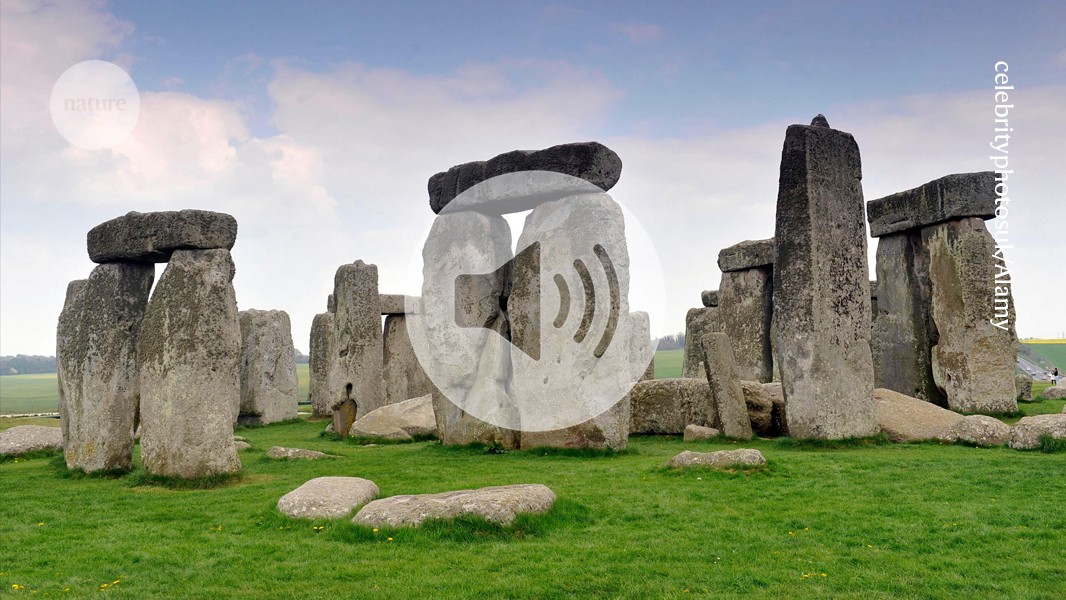
The Altar Stone stands apart at Stonehenge—both visually and geologically. It’s a large slab of greenish sandstone, distinct from the sarsens and bluestones scattered around the site. For decades, archaeologists assumed it was deliberately brought from a distant quarry. But its exact origin remained a mystery.
Recent geological work has pinpointed the source to a region in Scotland, far beyond the usual sites linked to Stonehenge’s other stones. That raised a key question: how did such a heavy stone travel so far south in prehistoric times? The new research suggests glaciers, not just human hands, played a key role.
Understanding the Altar Stone’s distinct origin is crucial. It’s not just another megalith dragged into place by Neolithic people. Its journey likely began with natural forces, complicating the story of Stonehenge’s construction and the extent of ancient human effort.
Rethinking Stonehenge’s Construction and Natural Forces

If glaciers carried the Altar Stone from Scotland, the story of Stonehenge’s construction shifts sharply. The old idea that ancient builders hauled every stone by sheer human effort now looks incomplete. Archaeologists must rethink how natural processes and human agency combined to shape the monument.
This insight complicates attempts to reconstruct the logistics and labor behind Stonehenge. It suggests prehistoric people might have taken advantage of landscapes already shaped by glaciers, rather than moving every massive stone themselves. That changes how we view their engineering and resource management.
For heritage managers and researchers, the finding calls for a closer integration of geological history with archaeological narratives. It could influence both funding and public education, highlighting the interplay between environment and culture.
More broadly, the discovery invites fresh scrutiny of other megalithic sites. If glaciers moved some stones at Stonehenge, might similar forces explain puzzling placements elsewhere? The line between natural history and human history is blurrier than once thought, prompting a reexamination of ancient monuments worldwide.
Global Digests News delivers timely, credible coverage of world affairs, politics, economy, and technology to keep you informed on today’s top stories.