Global Scale of AMR in Klebsiella pneumoniae
A new global study has mapped antimicrobial resistance (AMR) in Klebsiella pneumoniae using an unprecedented dataset of 47,000 genomes from more than 100 countries. This scale allows researchers to track how resistance evolves differently across regions, revealing not just common genetic pathways but also stark geographic variations.
These variations align closely with local antibiotic usage and healthcare practices, showing that resistance patterns are far from uniform. For instance, the evolution of resistance to key drugs like carbapenems and fluoroquinolones unfolds along distinct routes depending on the region. This nuanced picture challenges one-size-fits-all approaches to tackling AMR and underscores the need for tailored public health strategies worldwide.
Tracing Resistance Pathways Across Regions
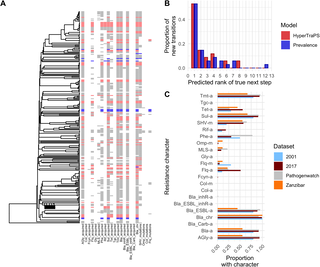
The study tracks antimicrobial resistance in Klebsiella pneumoniae through 47,000 genomes from more than 100 countries, revealing how resistance evolves along distinct pathways worldwide. Researchers identified common genetic routes leading to resistance but found that these paths diverge sharply between regions. For example, resistance to carbapenems—the last-resort antibiotics—develops differently in Asia compared to Europe or Africa.
These differences reflect local antibiotic usage patterns and healthcare practices. In regions with heavy carbapenem use, resistance mutations emerge quickly, while in areas with tighter drug controls, alternative resistance mechanisms predominate. The study’s evolutionary models also capture how fluoroquinolone resistance unfolds, showing that some populations accumulate mutations stepwise, whereas others acquire them in bursts linked to mobile genetic elements.
Longitudinal data from sub-Saharan Africa helped validate these findings, confirming that the models can predict resistance trends over time. This regional variability suggests that one-size-fits-all strategies to combat AMR may fall short. Instead, tailored approaches that consider local evolutionary dynamics and drug policies could better contain the spread of resistant Klebsiella strains.
Dataset and Validation Insights
The backbone of this global analysis is a colossal dataset—47,000 Klebsiella pneumoniae genomes collected from more than 100 countries. This scale is rare in antimicrobial resistance (AMR) studies and crucial for capturing the full spectrum of genetic diversity and resistance mechanisms. The researchers didn’t just compile sequences; they paired them with detailed metadata, including geographic origin and sampling dates, enabling temporal and spatial mapping of resistance traits.
To test their evolutionary models, the team turned to longitudinal data from sub-Saharan Africa. This region provided a real-world laboratory to see if predicted resistance trends matched observed patterns over time. The validation was robust: the models accurately forecasted the rise and spread of resistance genes, confirming that the evolutionary pathways identified weren’t just theoretical constructs but reflections of actual bacterial adaptation.
Importantly, the dataset’s breadth allowed for cross-regional comparisons, revealing how local antibiotic policies and healthcare systems shape distinct resistance trajectories. Without such extensive and well-annotated data, these nuanced insights would remain hidden. This foundation sets the stage for targeted interventions tailored to regional realities rather than one-size-fits-all solutions.
Tailoring Regional AMR Strategies
The clear message from this study is that one-size-fits-all strategies won’t cut it against Klebsiella pneumoniae’s antimicrobial resistance. Regions differ not only in which resistance genes dominate but also in how quickly those genes emerge and spread. This suggests that local antibiotic stewardship programs must be tailored to the specific evolutionary dynamics uncovered.
For policymakers, relying solely on global guidelines risks overlooking critical regional nuances. In places where carbapenem resistance arises rapidly, tighter controls on last-resort antibiotics and enhanced surveillance are urgent. Meanwhile, areas with slower resistance evolution might benefit more from preventive measures and targeted education campaigns.
Healthcare providers and pharmaceutical developers also face a shifting landscape. Treatment protocols effective in one country may falter elsewhere as resistance pathways diverge. Drug development pipelines could gain efficiency by focusing on regionally prevalent resistance mechanisms rather than chasing a universal target.
On a broader scale, integrating genomic surveillance into routine public health monitoring emerges as a practical necessity. The study’s validation with longitudinal data underscores the value of real-time tracking to anticipate resistance trends and adapt interventions accordingly. Without this agility, interventions risk lagging behind the bacteria’s rapid evolution.
The fight against Klebsiella pneumoniae’s AMR demands strategies as dynamic and varied as the bacteria’s own evolutionary routes. Ignoring regional differences risks accelerating resistance where efforts miss the mark.
Global Digests News delivers timely, credible coverage of world affairs, politics, economy, and technology to keep you informed on today’s top stories.