New Moons Found Around Outer Giants

Over 100 new irregular moons have been spotted orbiting the outer gas giants—Jupiter, Saturn, Uranus, and Neptune. These tiny, oddly shaped satellites are far from the orderly worlds we often imagine. Most are no larger than a few kilometers across, and their chaotic orbits suggest they’re fragments born from violent collisions within the last 100 million years. This surge in discoveries rewrites our understanding of the solar system’s outskirts. The outer planets aren’t static relics; they’re still shaping and reshaping their neighborhoods. Some of these moons may even be linked to Saturn’s famously young rings, hinting at a recent cosmic breakup that scattered debris across the system. The outer solar system is proving to be a far more dynamic place than once thought.

Collision Origins and Young Moons

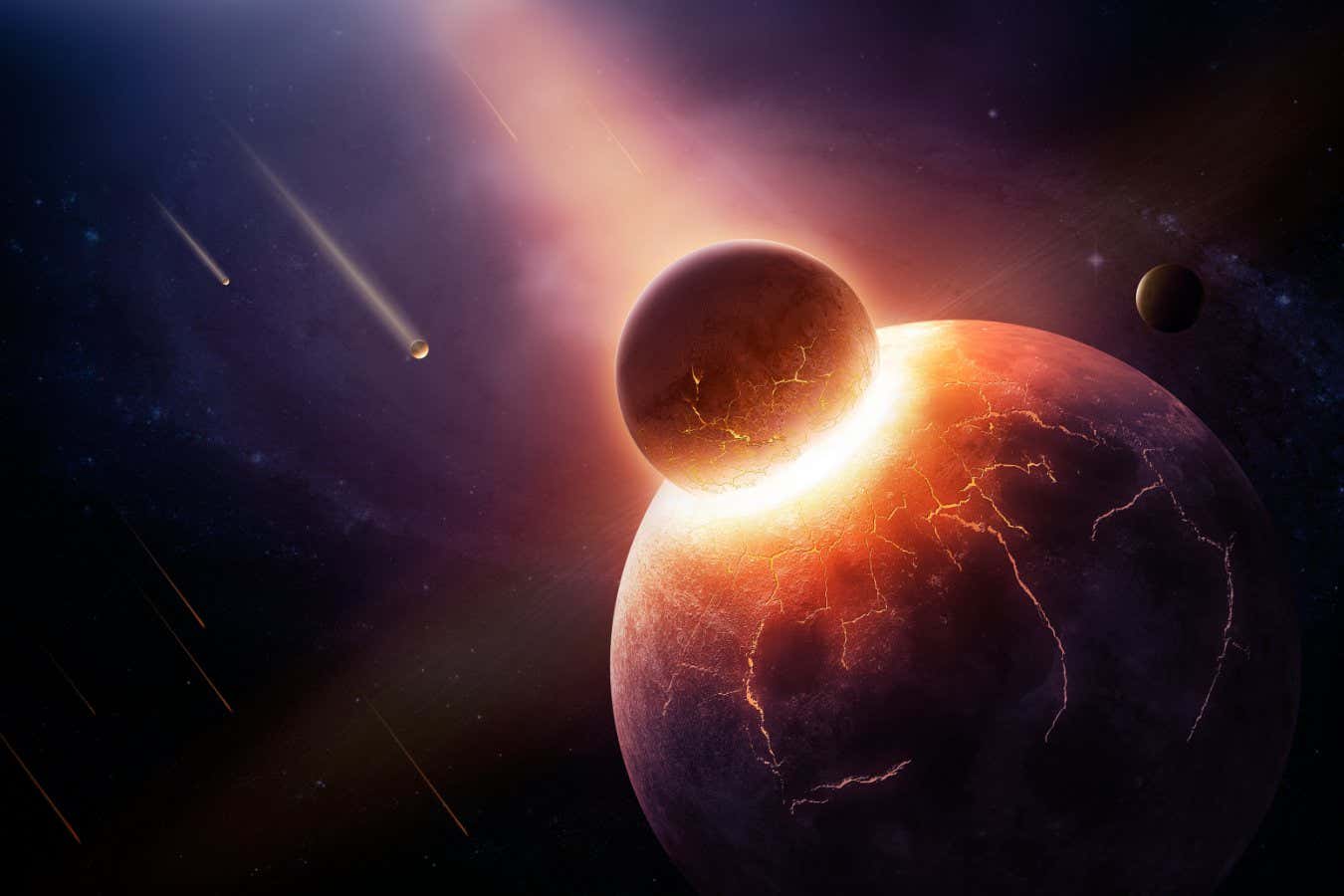
The new moons orbiting the outer giants aren’t ancient relics. Most are irregular—small, oddly shaped, and tracing eccentric orbits. Scientists estimate they formed within the last 100 million years, a blink in cosmic terms. This youth points to a chaotic past marked by collisions between larger icy bodies. One intriguing idea connects these moons to Saturn’s bright rings. Cassini mission data show Saturn’s rings are surprisingly young—no older than 100 million years. Researchers propose that a mid-sized icy moon, dubbed Chrysalis, shattered in a collision, scattering debris. Some fragments coalesced into the new irregular moons, while others spread into the rings we see today. This scenario fits the timing and composition patterns observed but isn’t confirmed. The outer solar system isn’t static; it’s still reshaping itself through impacts and breakups. Each new moon adds a piece to this puzzle, hinting at ongoing processes that continuously remodel planetary neighborhoods.

Saturn’s Rings and the Chrysalis Hypothesis

Saturn’s rings have long puzzled scientists because they appear far younger than the planet itself—only a few hundred million years old, while Saturn formed over 4 billion years ago. Cassini data deepened this mystery, showing the rings are mostly water ice with surprisingly little dust contamination. That points to a relatively recent origin, but the cause remains unclear. The Chrysalis hypothesis suggests an icy moon roughly the size of Mimas once orbited Saturn but was torn apart by gravitational forces. The debris from this breakup spread out, forming the rings we see today. At the same time, fragments from this event could have coalesced into the irregular moons now detected around Saturn. This idea links the youth of Saturn’s rings to the presence of these newly discovered moons, hinting at a violent episode in the planet’s recent past. While the theory fits some observations, direct proof remains elusive. Still, it offers a plausible narrative connecting ring formation and moon creation in a dynamic outer solar system.

What This Means for Solar System Dynamics

Finding so many irregular moons around the outer giants challenges the notion of a stable, settled solar system edge. These moons aren’t ancient leftovers; they’re fresh debris from recent collisions. That means the outer solar system is still actively reshaping itself. If a shattered moon like Chrysalis seeded both Saturn’s rings and a swarm of new satellites, it ties ring formation directly to ongoing dynamical chaos. This rewrites the timeline for Saturn’s iconic rings and forces a rethink of ring systems around other planets. For future missions, tracking these moons’ orbits could reveal clues about forces still at work billions of kilometers from the Sun. It also means the outer planets’ environments are more hazardous and variable than expected—a factor to consider in mission design. More broadly, this evidence of active evolution in the solar system’s outskirts nudges us to reconsider how planetary systems form and mature elsewhere. If violent reshuffling happens here, it might be common in other star systems too.
Ссылка на первоисточник