
Source-backed lead
Key takeaways
- The axiom of choice is fundamental to modern mathematics despite its early controversy.
- Its controversy stemmed from non-constructive implications that challenged traditional proof methods.
- Paul Cohen proved the axiom of choice is independent of ZFC set theory, meaning it cannot be proven or disproven within that system.
- This independence illustrates the complex relationship between logical foundations and practical mathematical reasoning.
- Acceptance of the axiom reflects how mathematical truth evolves through both theoretical and practical considerations.
What happened
The axiom of choice emerged as a fundamental principle in set theory, crucial for many areas of modern mathematics. Initially, it sparked controversy because it allowed for non-constructive proofs—statements that assert the existence of objects without explicitly constructing them.
In 1963, mathematician Paul Cohen made a groundbreaking contribution by proving that the axiom of choice is independent of the standard Zermelo-Fraenkel set theory (ZFC). This means that within the ZFC framework, the axiom cannot be proven true or false.
This result demonstrated that mathematical foundations incorporate both logical rigor and practical choices about which axioms to accept. Over time, the axiom of choice gained widespread acceptance, reflecting an evolving understanding of mathematical truth shaped by both theoretical and utilitarian considerations.
What the source actually says
The original report was published by Quanta Magazine, a reputable online science publication known for in-depth coverage of mathematics and theoretical science. The article focuses on the axiom of choice, a fundamental principle in set theory and modern mathematics.
From the source, it can be confidently stated that the axiom of choice plays a crucial role in many areas of mathematics but was initially controversial because it allows for non-constructive proofs—results that assert existence without explicitly constructing examples.
The article details Paul Cohen’s landmark work demonstrating that the axiom of choice is independent of the standard Zermelo-Fraenkel set theory (ZFC). This means it can neither be proven nor disproven using the axioms of ZFC alone, highlighting a profound aspect of mathematical logic and foundational theory.
Quanta Magazine’s coverage emphasizes how the acceptance of the axiom of choice reflects a balance between logical rigor and pragmatic utility in mathematics, illustrating how mathematical truth evolves beyond purely formal proofs.
For a full understanding of these insights and their historical context, the original article is available here.
Why it matters
The axiom of choice matters because it underpins many fundamental results in modern mathematics, despite its initially contentious status. Its acceptance allows mathematicians to make selections from infinite collections without explicit rules, enabling proofs and theories that would otherwise be inaccessible. This has practical implications across various mathematical fields, from analysis to topology.
Paul Cohen’s demonstration that the axiom of choice is independent of the standard ZFC framework reveals deep insights into the limits of mathematical logic. It shows that some mathematical truths depend on the axioms we choose to accept, highlighting the evolving and somewhat flexible nature of mathematical foundations. This challenges the notion of absolute mathematical certainty and opens ongoing philosophical discussions about the nature of mathematical truth.
For students, educators, and enthusiasts, understanding the axiom of choice and its independence is crucial for appreciating how mathematical theories are constructed and validated. It also influences how future research and teaching approaches foundational concepts, balancing logical rigor with practical utility.
Numbers, dates, and hard facts
The axiom of choice is a fundamental principle in modern mathematics, crucial for many proofs and constructions.
- First introduced in the early 20th century, it became controversial due to its non-constructive nature, meaning it asserts the existence of objects without explicitly constructing them.
- On April 29, 2026, Quanta Magazine published an article detailing the axiom’s significance and controversies.
- Paul Cohen, a mathematician, proved that the axiom of choice is independent of ZFC (Zermelo-Fraenkel set theory with the axiom of choice), meaning it can neither be proven nor disproven using the standard axioms of set theory.
- This independence result highlights that the acceptance of the axiom is a matter of mathematical convention rather than logical necessity.
- The axiom’s acceptance reflects the balance between logical rigor and practical utility in the foundations of mathematics.
What to watch next
Looking ahead, mathematicians and philosophers will continue to explore the implications of the axiom of choice’s independence from ZFC, particularly how it shapes foundational theories and influences practical applications. Key developments to watch include ongoing debates about the axiom’s role in various mathematical frameworks and any new insights into alternative set theories that either adopt or reject it.
Additionally, future research may clarify unresolved questions about the balance between logical rigor and utility in mathematical truth, potentially impacting teaching approaches and the acceptance of axioms in broader mathematical practice. Updates from conferences, publications, and advances in logic will be critical for those following the evolving story of the axiom of choice.
Global Digests News delivers timely, credible coverage of world affairs, politics, economy, and technology to keep you informed on today’s top stories.

GitHub Tightens Bug Bounty Rules to Cut Low-Value Reports
GitHub is raising standards for its bug bounty program to weed out AI-generated, low-impact reports. Now, submissions must prove reproducib…
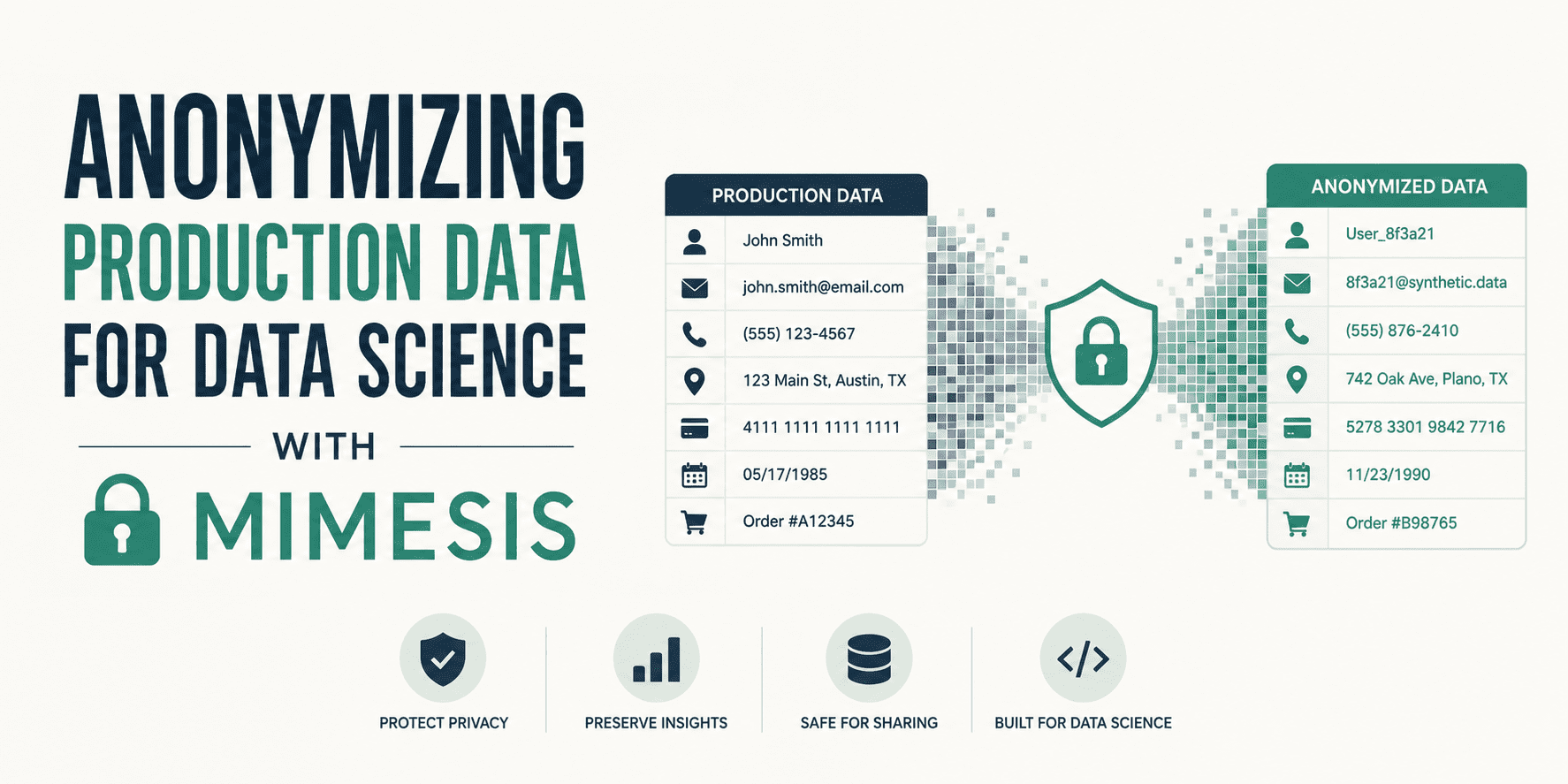
Data Anonymization with Mimesis: Key Insights
Mimesis is an open-source Python library that generates realistic synthetic data locally, enabling effective anonymization of sensitive pro…

Louisiana’s Vanishing Coastline: Early Signals of Climate-Driven Change
Louisiana’s coastline is disappearing rapidly due to rising seas and stronger storms, triggering population shifts and economic upheaval. A…
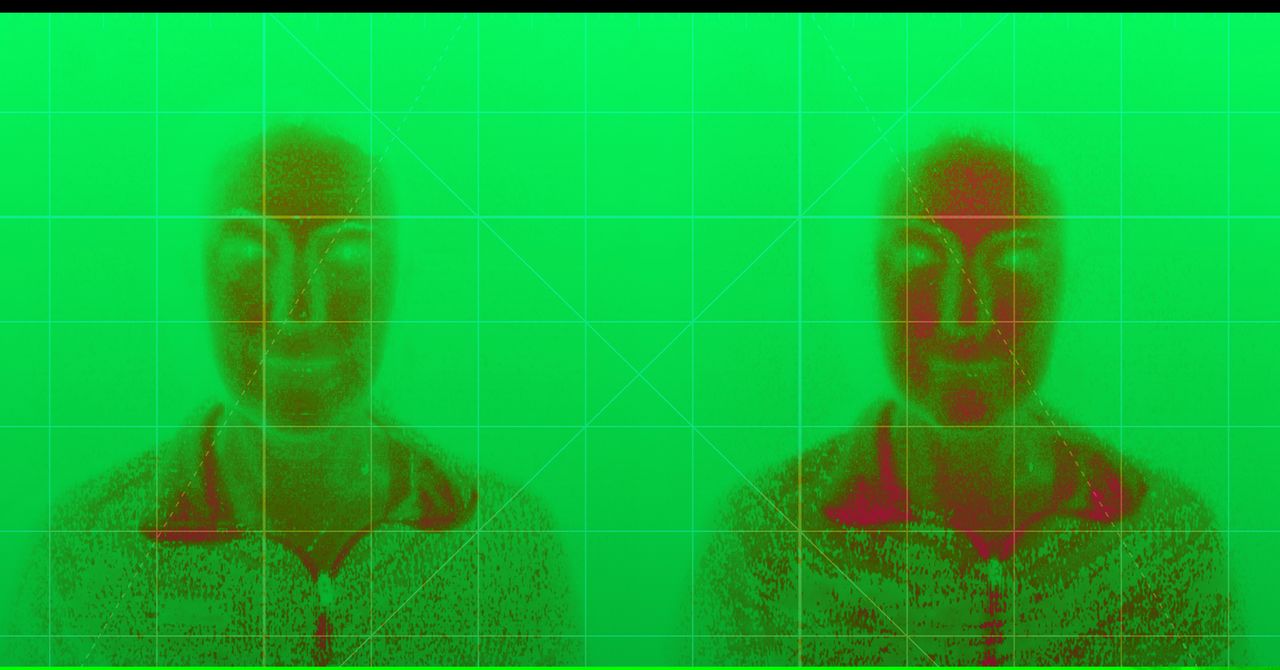
Metalenz Unveils Polar ID: Rethinking Face Authentication with Invisible Sensors
Metalenz’s Polar ID uses optical metasurfaces to analyze polarized light from skin, beating spoofing attempts better than Face ID. Hidden b…

DHS Attempts to Access Data on Canadian Critic of U.S. Immigration
The Department of Homeland Security used a customs summons to demand Google hand over location and activity data on a Canadian man critical…

Bohmian Mechanics: Revisiting Quantum Determinism After New Tests
Bohmian mechanics, once sidelined, returned to focus after a 2025 photon tunneling experiment tested its deterministic claims. The results…

Dark Matter Detection: Innovations Inspired by Henry Cavendish's Experiment
A modern take on Henry Cavendish’s 18th-century torsion balance proposes nested metal shells and ultra-sensitive voltage measurements to de…

Greenland’s Ice Melt Surges Since 1990
Greenland’s ice melt has accelerated sixfold since 1990, driven mainly by rising temperatures rather than atmospheric shifts. Extreme melt…