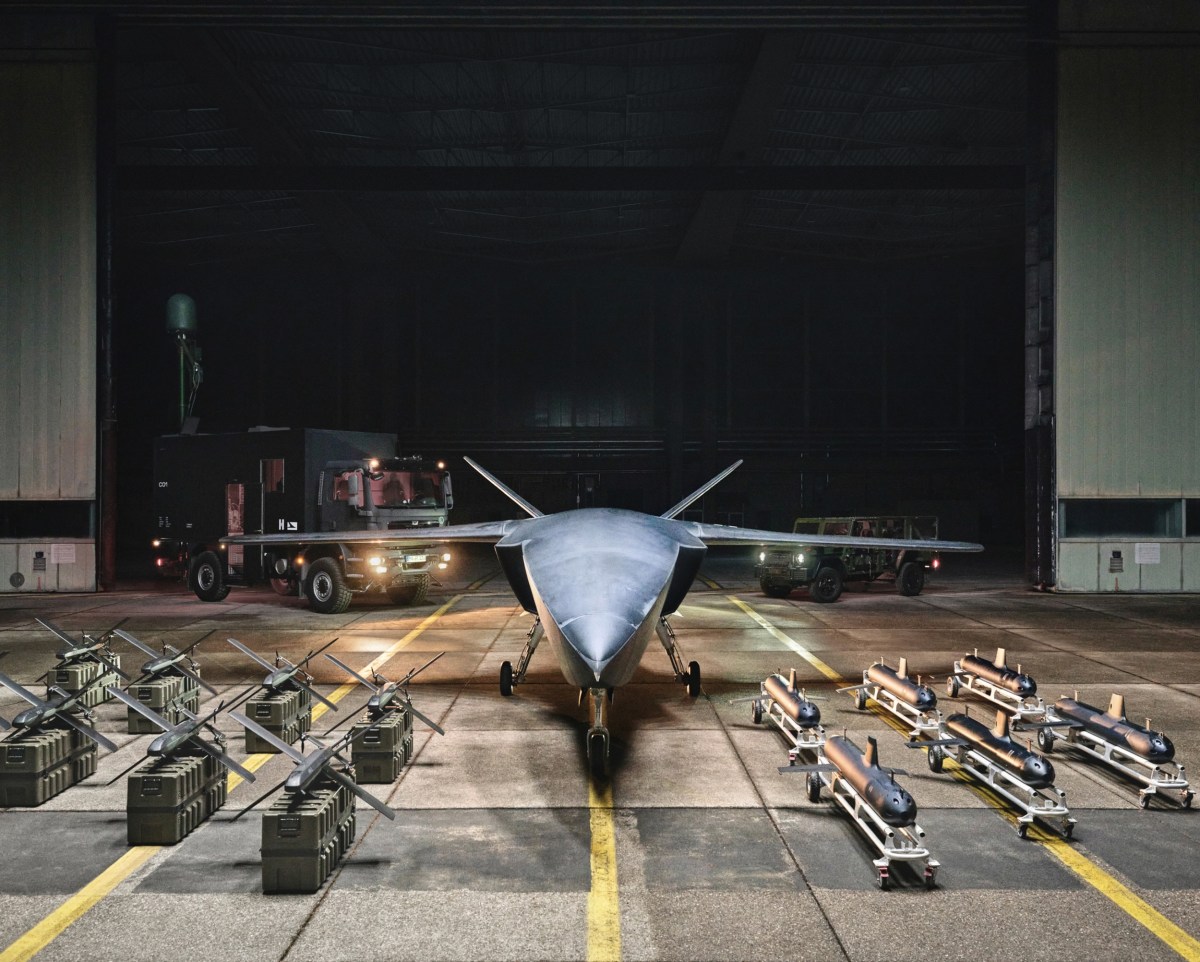
Helsing's Rapid Rise in Defense AI
Helsing’s latest funding round has turned heads across the defense and tech sectors. The European startup, barely five years old, is about to close a staggering $1.2 billion raise, pushing its valuation to $18 billion—up from $14 billion less than a year ago. This isn’t just a leap in numbers; it’s a clear signal that autonomous military technology is no longer niche or experimental. It’s becoming central to defense strategies, especially in Europe.
What’s driving this surge? The ongoing conflict in Ukraine has sharpened the urgency for smarter, faster, and more autonomous defense tools. Helsing’s focus on military drones and AI positions it at the forefront of this shift. Backed by heavyweight investors like Dragoneer and Lightspeed, and with Spotify co-founder Daniel Ek already on board from a prior round, Helsing is now the continent’s most valuable defense tech unicorn—far outpacing competitors. The market is telling us something: the race for advanced defense AI is accelerating, and Helsing is leading the pack.
The $1.2 Billion Funding Round and Valuation Surge
Helsing’s latest funding round, closing at $1.2 billion, marks a sharp leap in its valuation to $18 billion, up from $14 billion less than a year ago. This round is led by Dragoneer, with Lightspeed stepping in as a co-lead investor. The startup, just five years old, has quickly become Europe’s most valuable defense unicorn, eclipsing competitors like Quantum Systems, valued around $3.3 billion, and Tekever at about $1.3 billion.
This surge isn’t happening in a vacuum. The backdrop is a Europe grappling with heightened geopolitical tensions, especially the ongoing conflict in Ukraine, which has accelerated demand for autonomous military technologies. Helsing’s focus on AI-driven drones and defense systems clearly resonates with investors looking to back cutting-edge solutions in this space.
Notably, Spotify co-founder Daniel Ek had previously invested in Helsing’s €600 million round in mid-2025, signaling early confidence from high-profile tech figures. The speed and scale of this new round underscore how rapidly Helsing’s market opportunity is expanding, reflecting both investor appetite and the urgency of modern defense challenges.
What Helsing's Growth Means for European Defense Tech
Helsing’s explosive growth signals more than just a win for one startup—it marks a shift in how Europe approaches defense innovation. With a valuation now towering at $18 billion, Helsing isn’t simply riding a wave; it’s helping to create one. This influx of capital reflects a clear market conviction: autonomous military technology is no longer a distant ambition but an urgent necessity. For European defense firms, this sets a new benchmark. Investors and competitors alike will feel the pressure to accelerate development cycles and scale rapidly or risk losing ground to Helsing’s momentum.
Policy makers can’t ignore this either. The geopolitical tensions fueling demand—most notably Russia’s ongoing conflict in Ukraine—underscore a strategic imperative to bolster domestic capabilities. Helsing’s rise could prompt governments to reconsider procurement strategies, potentially favoring homegrown tech with proven backing over traditional suppliers. That might open doors for startups but also raise questions about regulation, export controls, and ethical deployment of AI-driven weapons.
For the market, the stakes are high. Helsing’s valuation leap overshadows peers by a wide margin, signaling a consolidation trend where a few dominant players could capture much of the sector’s growth. This concentration could spur innovation but also create bottlenecks, depending on how partnerships and supply chains evolve. Buyers—military or commercial—will need to weigh the benefits of cutting-edge autonomy against risks tied to vendor dependence and geopolitical entanglements.
In short, Helsing’s funding milestone isn’t just a headline. It’s a barometer for Europe’s defense tech trajectory, one that challenges every actor in the ecosystem to rethink speed, scale, and strategy.
Key Points to Consider on Autonomous Defense Innovation
Helsing’s latest funding milestone isn’t just a headline about big numbers—it signals a clear shift in how Europe is approaching defense technology. The jump to an $18 billion valuation, led by heavyweight investors, underscores a growing urgency to develop autonomous military systems that can keep pace with evolving threats. For decision-makers, this means the market for AI-powered defense tools is no longer niche or experimental; it’s rapidly becoming a strategic priority backed by serious capital.
What’s crucial to note is that Helsing’s rise reflects more than just investor enthusiasm. It’s a response to tangible geopolitical pressures—most notably the conflict in Ukraine—that have exposed vulnerabilities in traditional defense setups. Autonomous drones and AI-driven systems promise faster, more adaptable responses on the battlefield, which European militaries are eager to integrate. This momentum suggests that companies in this space will face increasing demand, but also heightened expectations for performance and reliability.
For those evaluating opportunities in defense innovation, Helsing’s trajectory offers a practical benchmark. It highlights where funding flows are headed and what kinds of capabilities are attracting attention. Yet, it also raises questions about competition, regulatory hurdles, and the ethical complexities of autonomous weapons. Simply put, anyone looking to enter or invest in this field must weigh not only the technological promise but also the broader strategic and societal challenges that come with accelerating military AI development.

Global Digests News delivers timely, credible coverage of world affairs, politics, economy, and technology to keep you informed on today’s top stories.

Bohmian Mechanics: Revisiting Quantum Determinism After New Tests
Bohmian mechanics, once sidelined, returned to focus after a 2025 photon tunneling experiment tested its deterministic claims. The results…

Dark Matter Detection: Innovations Inspired by Henry Cavendish's Experiment
A modern take on Henry Cavendish’s 18th-century torsion balance proposes nested metal shells and ultra-sensitive voltage measurements to de…

Greenland’s Ice Melt Surges Since 1990
Greenland’s ice melt has accelerated sixfold since 1990, driven mainly by rising temperatures rather than atmospheric shifts. Extreme melt…

Health Insurance Marketplaces Leak Sensitive Data to Ad Tech Giants
Nearly all U.S. state health insurance marketplaces have exposed sensitive applicant data—including citizenship and race—to major ad tech f…

Instagram’s Voluntary AI Creator Label: A Tentative Step Toward Transparency
Instagram has launched an optional “AI creator” label for posts generated or altered by AI. Without automated detection, the system relies…

Uber’s Ambitious Expansion and Innovation
Uber CEO Dara Khosrowshahi lays out a vision to transform Uber into a travel and service platform. By integrating Expedia hotel bookings an…
Claude Code Cost Control: Context Architecture Over Prompt Optimization
Claude Code’s costs stem less from prompt length and more from accumulated context—files, memory, and tool outputs that build up each sessi…

Leonardo da Vinci’s DNA May Finally Be Decoded
Researchers have mapped a 21-generation paternal lineage from 1331 to today, identifying 15 living male descendants of Leonardo da Vinci. G…