X’s Communities Shutdown Creates a Void
X’s abrupt discontinuation of its Communities feature has disrupted a key social infrastructure for creators and organizations. These groups suddenly lost a centralized hub where they could gather followers, moderate discussion, and shape their own digital environments. The void is immediate and tangible: without X’s built-in tools, many face the challenge of rebuilding community spaces from scratch or migrating to less familiar platforms.
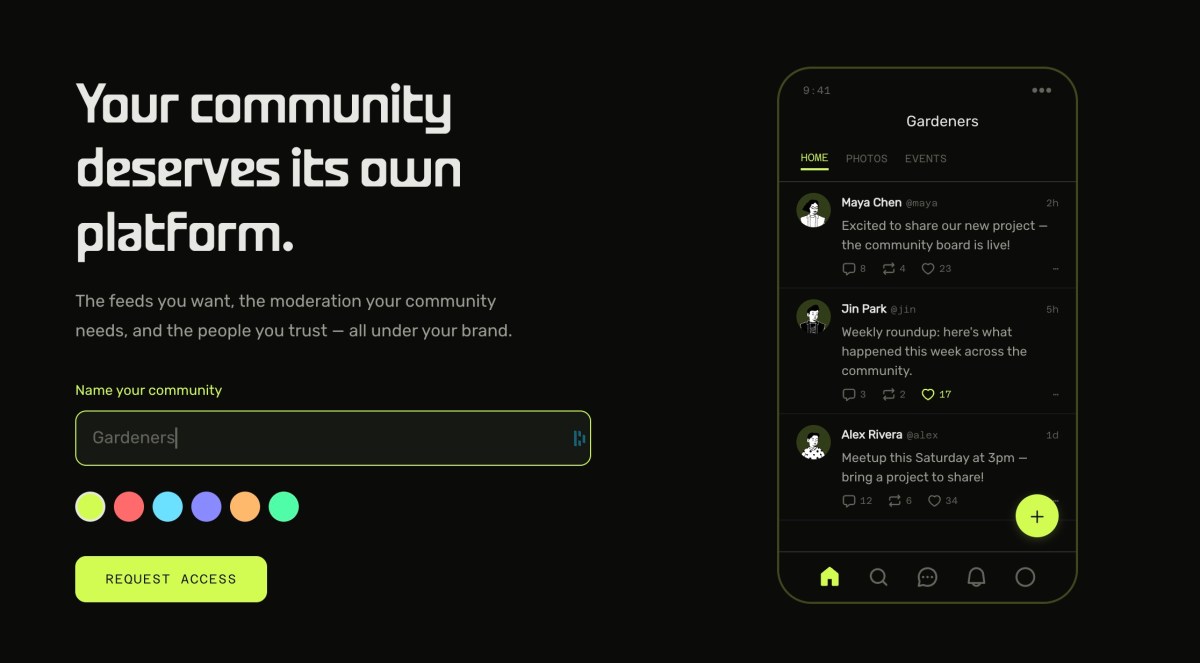
Enter Acorn, a decentralized alternative developed by Blacksky on the AT Protocol. It promises to restore control to community leaders, offering customizable spaces that emphasize direct governance over content policies and member engagement. But this shift from centralized to decentralized raises pressing questions. Can Acorn’s technical design truly replicate the seamless moderation and data oversight creators relied on? Or will the trade-offs in decentralization introduce new operational risks that undermine the very autonomy it seeks to grant?
Acorn Emerges on the Decentralized AT Protocol
Acorn launched in early May 2026, shortly after X announced the shutdown of its Communities feature. Developed by Blacksky, Acorn is built on the decentralized AT Protocol, which underpins a growing ecosystem of interoperable social applications. This timing suggests a direct response to the sudden void left for creators and organizations who relied on X’s Communities for managing their online groups.
Unlike centralized platforms, Acorn offers community leaders granular control over their spaces. Users can customize moderation policies, implement tiered membership options, and access detailed analytics without intermediaries. Blacksky emphasizes that data ownership remains with community administrators, a departure from traditional models where platform algorithms heavily influence visibility and engagement.
Technically, Acorn leverages the AT Protocol’s decentralized identity and data storage systems. This design aims to reduce single points of failure and censorship risks inherent in centralized networks. Hosting options are flexible—communities can choose between Blacksky’s managed infrastructure or self-hosting, which introduces operational complexity but enhances autonomy.
However, decentralization introduces challenges. Moderation depends largely on community-appointed admins, raising questions about consistency and enforcement at scale. The AT Protocol’s nascent ecosystem means interoperability is still evolving, potentially limiting seamless user experiences across platforms. Security protocols, while robust, must continuously adapt to threats unique to distributed architectures.
Acorn’s pricing model is also notable. Instead of a fixed subscription, it offers scalable plans tailored to community size and feature needs. This flexibility could attract diverse user bases but might complicate budgeting for creators accustomed to flat fees.
In sum, Acorn’s emergence marks a technically ambitious attempt to reclaim community autonomy post-X. Yet, its decentralized foundation demands careful scrutiny of moderation efficacy, data security, and operational overhead before it can be deemed a reliable alternative for creators accustomed to centralized convenience.
Challenges of Decentralized Community Platforms
Decentralization’s promise often collides with operational realities. Acorn’s architecture, built on the AT Protocol, hands control back to community leaders, but that autonomy demands technical competence and resource investment many creators may lack. Unlike centralized platforms that absorb moderation overhead, decentralized spaces shift that burden onto community managers, raising questions about scalability and consistency. The advanced moderation tools Acorn offers help, yet they cannot fully eliminate the risk of fragmented enforcement or delayed responses to harmful content.
Data security and privacy also inhabit a gray zone. While decentralization reduces reliance on a single corporate gatekeeper, it disperses data across multiple nodes, increasing the attack surface. Ensuring end-to-end encryption and robust identity verification in a federated environment is complex and still evolving. Users and creators must weigh these trade-offs against the opaque algorithms and centralized data silos they seek to escape.
Moreover, the economic model underpinning Acorn’s flexible pricing and hosting options introduces uncertainty. Without the deep pockets of a centralized giant, sustaining infrastructure resilience during traffic spikes or coordinated attacks could prove challenging. This fragility might undermine the very community stability that creators hope to secure.
Finally, the transition itself is nontrivial. Migrating existing communities from X’s centralized ecosystem to a decentralized platform involves data portability hurdles, user experience adjustments, and potential fragmentation of audiences. The ideal of creator-owned communities is compelling, but it requires navigating a complex technical and social landscape that remains, for now, only partially charted.
What Creators Gain and Risk with Acorn
Creators stepping into Acorn gain a level of autonomy that centralized platforms rarely offer. They can tailor community rules, manage membership, and access detailed engagement analytics without waiting on corporate gatekeepers. This control extends to data ownership, meaning creators aren’t just tenants but actual stewards of their digital spaces. For those frustrated by opaque algorithms and unpredictable content moderation on mainstream platforms, Acorn’s model promises transparency and direct influence.
However, this freedom carries its own risks. Decentralization shifts moderation responsibilities squarely onto creators and their teams, demanding time, expertise, and vigilance to maintain healthy communities. Unlike centralized platforms with dedicated moderation staff and automated safeguards, Acorn’s approach could expose communities to harmful content if oversight lapses. Data security also hinges on the robustness of the AT Protocol and the hosting choices made by community leaders, introducing variability in protection standards.
Financially, while Acorn offers flexible pricing and hosting options, creators must weigh these costs against uncertain returns in a less mature ecosystem. The platform’s success depends heavily on network effects and user adoption, which remain unproven at scale. Creators venturing here should prepare for a steeper operational learning curve and potential technical hurdles.
In essence, Acorn hands creators a powerful toolbox but also a heavier workload and new technical liabilities. The trade-off is clear: more control and ownership, balanced against greater responsibility and risk. Whether this model will sustain vibrant, safe communities without centralized oversight remains an open question, demanding cautious experimentation rather than blind migration.