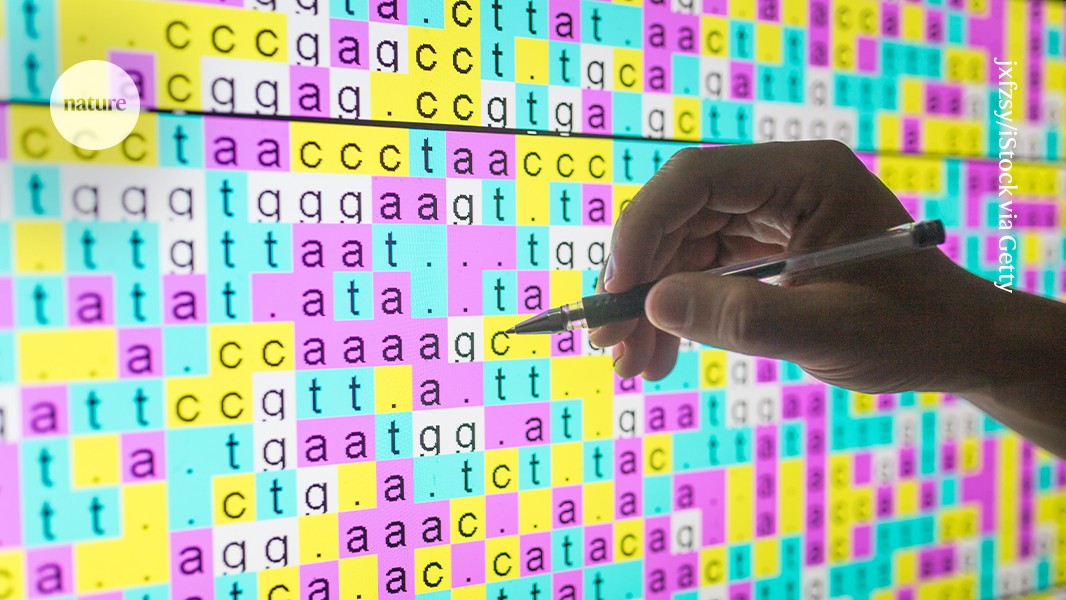
Source-backed lead
Key takeaways
- Massively Parallel Reporter Assays (MPRAs) test millions of genetic variants simultaneously for their regulatory effects on gene expression.
- MPRAs face limitations, including differences from natural chromatin environments and restrictions on tested sequence size.
- Combining MPRAs with CRISPR enhances the understanding of genome regulation mechanisms.
- These advances enable precision medicine by supporting tissue-specific gene activation with fewer off-target effects.
- Progress in MPRAs is accelerating developments in synthetic biology and innovative gene therapies.
What happened
What the source actually says
Why it matters
Numbers, dates, and hard facts
- Source publication: Nature, 2026
- Key technology: Massively Parallel Reporter Assays (MPRAs)
- Applications: gene regulation studies, precision medicine, synthetic biology, gene therapies
- Challenges: mimicking natural chromatin environment; sequence size limitations
- Integration with CRISPR: improves functional characterization of regulatory elements
What to watch next
Looking ahead, the integration of Massively Parallel Reporter Assays with gene-editing technologies like CRISPR will be critical to watch as researchers seek to overcome current limitations related to chromatin context and sequence size. Upcoming studies are expected to refine the precision and applicability of these tools, particularly in tissue-specific gene regulation and therapeutic development.
Additionally, ongoing efforts to translate these advances into clinical and synthetic biology applications will reveal how effectively MPRAs can drive novel treatments and engineered biological systems. Key questions remain about scalability, off-target effects, and the ability to model complex regulatory environments, making future updates in this field essential for both scientific and medical communities.
Global Digests News delivers timely, credible coverage of world affairs, politics, economy, and technology to keep you informed on today’s top stories.

Bohmian Mechanics: Revisiting Quantum Determinism After New Tests
Bohmian mechanics, once sidelined, returned to focus after a 2025 photon tunneling experiment tested its deterministic claims. The results…

Dark Matter Detection: Innovations Inspired by Henry Cavendish's Experiment
A modern take on Henry Cavendish’s 18th-century torsion balance proposes nested metal shells and ultra-sensitive voltage measurements to de…

Greenland’s Ice Melt Surges Since 1990
Greenland’s ice melt has accelerated sixfold since 1990, driven mainly by rising temperatures rather than atmospheric shifts. Extreme melt…

Health Insurance Marketplaces Leak Sensitive Data to Ad Tech Giants
Nearly all U.S. state health insurance marketplaces have exposed sensitive applicant data—including citizenship and race—to major ad tech f…

Instagram’s Voluntary AI Creator Label: A Tentative Step Toward Transparency
Instagram has launched an optional “AI creator” label for posts generated or altered by AI. Without automated detection, the system relies…

Uber’s Ambitious Expansion and Innovation
Uber CEO Dara Khosrowshahi lays out a vision to transform Uber into a travel and service platform. By integrating Expedia hotel bookings an…
Claude Code Cost Control: Context Architecture Over Prompt Optimization
Claude Code’s costs stem less from prompt length and more from accumulated context—files, memory, and tool outputs that build up each sessi…

Leonardo da Vinci’s DNA May Finally Be Decoded
Researchers have mapped a 21-generation paternal lineage from 1331 to today, identifying 15 living male descendants of Leonardo da Vinci. G…