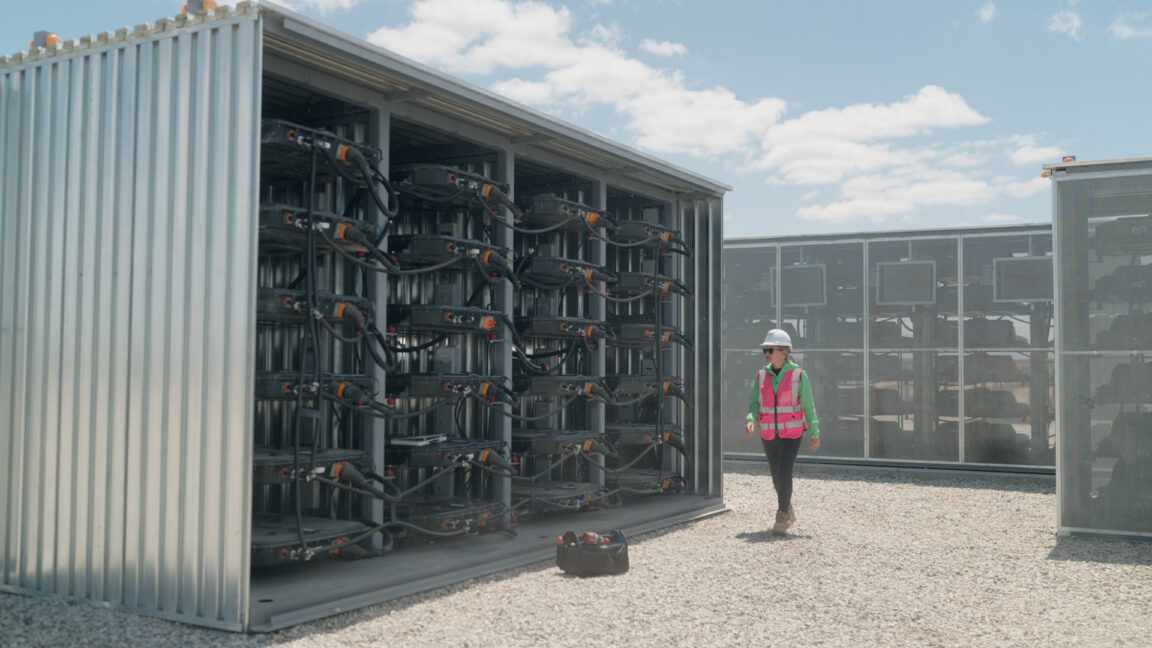
Turning Retired Robotaxi Batteries into Grid Storage
Waymo’s latest move repurposes batteries retired from its autonomous robotaxis, redirecting them from the road to the power grid. Partnering with B2U Storage Solutions, these batteries—deemed no longer fit for the high demands of vehicle propulsion—are being reconfigured for stationary energy storage. The shift capitalizes on the residual capacity these cells retain, turning what would be waste into a resource capable of smoothing out grid fluctuations and storing excess renewable energy.
This isn’t just a recycling story; it’s a complex engineering challenge. Batteries that have endured years of variable loads and environmental stresses must be rigorously tested and reconditioned to ensure safety and reliability in a stationary setting. Integrating these second-life batteries into grid infrastructure demands precise control systems and robust monitoring to mitigate risks like capacity fade, thermal runaway, or unexpected failure. The scale is notable too—Waymo’s extensive fleet could translate into hundreds of megawatt-hours of storage, a substantial contribution to local energy resilience but one that requires careful lifecycle management and operational oversight.
Partnership with B2U Storage Solutions
Waymo’s collaboration with B2U Storage Solutions marks a deliberate shift from vehicle-centric battery use to stationary energy storage. The partnership, initiated in early 2026, focuses on repurposing batteries retired from Waymo’s autonomous robotaxi fleet. These batteries, although no longer meeting the stringent power and durability demands for driving, retain significant capacity—typically around 70 to 80 percent of their original energy storage potential.
B2U Storage Solutions specializes in integrating second-life batteries into modular storage units designed for grid applications. The process begins with a comprehensive assessment of each battery pack’s health, including capacity fade, internal resistance, and safety metrics. Only batteries passing rigorous screening enter B2U’s refurbishment pipeline, where they are reconfigured and balanced to perform reliably in stationary setups.
By mid-2026, the first pilot installations were deployed in select communities near Waymo’s operational hubs. These installations serve as backup power sources and help smooth out intermittent renewable generation by absorbing excess energy and releasing it during demand peaks. The modular design enables scalability; as more retired batteries become available, storage capacity can incrementally expand.
This initiative leverages the predictable decline in battery performance post-vehicle use, turning what would be waste into a resource that supports grid stability. However, challenges remain. Variability in battery aging patterns complicates standardization, and repurposed units require ongoing monitoring to detect performance degradation or safety issues. The partnership addresses these risks through embedded diagnostics and remote management systems, but long-term reliability data is still accumulating.
Overall, Waymo and B2U’s alliance represents a technically complex but promising model for extending battery utility beyond transportation, contributing to energy resilience while mitigating environmental impact from battery disposal.
Challenges and Considerations in Battery Repurposing
Repurposing retired robotaxi batteries for stationary storage is far from plug-and-play. These cells have endured years of high-demand cycling under variable conditions—rapid acceleration, frequent stops, exposure to temperature swings—that degrade capacity and alter internal chemistry in uneven ways. Identifying which packs remain viable for grid use requires rigorous testing beyond simple state-of-charge metrics. Subtle degradation modes like lithium plating or electrode delamination can reduce safety margins and lifespan unpredictably once the battery is removed from its original vehicle control system.
Integration into stationary storage also demands reengineering the battery management system (BMS). The original BMS was optimized for dynamic driving profiles, balancing power delivery and thermal management in real time. In a grid context, the priorities shift toward long-duration cycling, consistent temperature control, and fault tolerance under different electrical loads. Retrofitting or replacing BMS hardware and software introduces complexity and potential points of failure. Moreover, the physical reconfiguration of battery modules to fit new form factors or enclosures can expose cells to mechanical stress or uneven cooling, accelerating wear.
Another layer of uncertainty stems from the economic and regulatory environment. The value proposition depends heavily on local electricity market dynamics, incentives for energy storage, and evolving safety standards. Unexpected changes in grid demand patterns or policy could impact the feasibility and scalability of second-life battery projects. Additionally, the environmental benefit hinges on extending battery life without incurring disproportionate energy or material costs in refurbishment and transportation.
Finally, while the circular economy narrative is compelling, the sheer scale of battery turnover and the heterogeneity of retired packs pose logistical challenges. Efficient sorting, grading, and deployment pipelines must be established to avoid bottlenecks. Without robust quality controls and standardized protocols, repurposed batteries risk underperformance or premature failure, potentially undermining grid reliability rather than enhancing it. These technical and operational considerations underscore that battery repurposing is a promising but intricate endeavor requiring careful engineering and vigilant oversight.
What This Means for Sustainable Energy and EV Lifecycle
Extending the life of EV batteries beyond their automotive use is more than just a clever recycling move—it’s a practical lever for sustainable energy systems. Waymo’s initiative to repurpose robotaxi batteries into stationary storage taps into the reality that batteries often retain significant capacity even after they no longer meet the stringent demands of vehicle propulsion. This leftover capacity, if harnessed correctly, can smooth out the intermittency of renewables by storing excess energy when supply exceeds demand and releasing it during peak consumption.
But the path isn’t without hurdles. Engineering these second-life battery systems requires careful balancing of performance degradation, safety margins, and integration complexity. The variability in battery health from unit to unit means that repurposing must be backed by robust diagnostics and adaptive management software to avoid premature failures or unexpected capacity drops. Moreover, the economics hinge on minimizing refurbishment costs while maximizing usable output, which challenges current manufacturing and recycling infrastructures.
From a broader perspective, the approach underscores a shift in how we think about EV batteries—not as single-use components but as multi-phase assets contributing to energy resilience. If scaled effectively, such projects could alleviate pressure on raw material supply chains by squeezing more utility from existing cells. Still, the operational risks tied to aging battery chemistries and the need for standardized repurposing protocols call for cautious optimism. The initiative’s success will depend on transparent performance data and continued innovation in battery health monitoring to ensure these second-life applications are both safe and economically viable.