Seven AI Projects to Automate Everyday Tasks in 2026

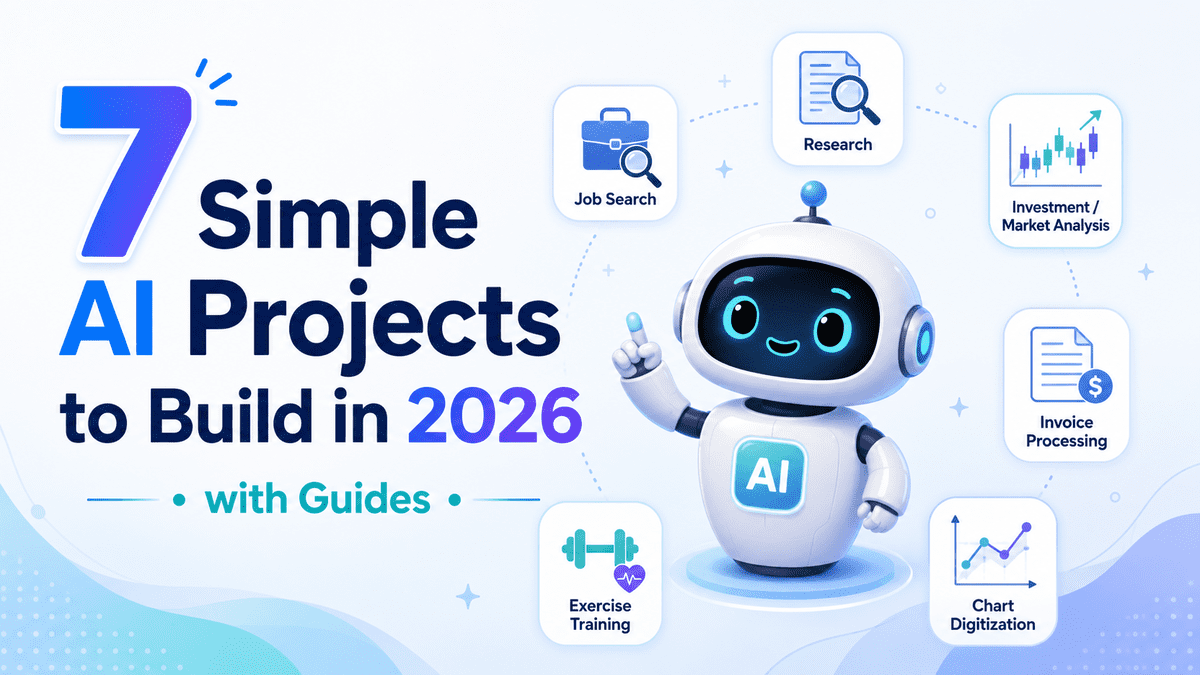
Seven AI projects are reshaping how everyday workflows get done in 2026. From automating job searches to streamlining invoice processing, these initiatives pack practical value and technical sophistication into surprisingly accessible packages. Each project comes with detailed guides and code samples, making them ready to deploy or customize without months of trial and error. What stands out is the blend of emerging AI tools—OpenAI Agents SDK, Claude Opus, Olostep—and persistent memory systems that let agents learn and adapt over time. The result? Smarter automation that doesn’t just repeat tasks but evolves with user needs. For developers and data scientists, these projects offer a fast track to building AI-powered solutions that save time and boost productivity in real-world settings.

Tools and Techniques Powering These Projects

The backbone of these seven AI projects lies in a carefully curated mix of emerging tools and frameworks, each chosen for their ability to streamline complex workflows. At the heart of many initiatives is the OpenAI Agents SDK, which offers a flexible environment to build autonomous agents capable of handling multi-step tasks. Its modular design allows developers to plug in various APIs and customize agent behavior, making it ideal for projects like personalized exercise coaching or investment analysis where adaptability is key. Alongside this, Olostep emerges as a lightweight orchestration layer, designed to simplify task sequencing and state management. Its appeal is in reducing boilerplate code, letting users focus on the logic rather than infrastructure. This proves especially useful in invoice processing and chart digitization projects, where data flows through multiple transformation stages. Claude Opus, another player in the mix, brings conversational AI finesse. Its strength is in natural language understanding and generation, which enhances research assistance and job searching tools by enabling more intuitive user interactions. The integration of persistent memory systems further elevates these agents, allowing them to recall past interactions and context, which is crucial for maintaining continuity across sessions and improving long-term performance. Chronologically, these technologies have evolved rapidly over the past two years, with OpenAI Agents SDK debuting in late 2024, quickly followed by Olostep's release in early 2025. Claude Opus, introduced mid-2025, filled a gap in conversational capabilities that earlier models struggled with. Persistent memory solutions have matured in parallel, leveraging advances in vector databases and retrieval-augmented generation to store and query large context windows efficiently. Together, these tools form a cohesive stack that balances ease of use with technical depth. They empower developers to build intelligent agents that don’t just execute commands but learn and adapt. The projects leverage this synergy to automate repetitive tasks, reduce manual errors, and ultimately free users to focus on higher-value activities.

Who Benefits and How These Projects Fit Into Broader AI Adoption

These seven AI projects don’t just showcase clever code—they tap directly into everyday workflows ripe for automation. Job seekers, for example, gain tools that sift through listings and tailor applications, cutting hours of manual searching. Researchers get AI assistants that parse dense papers and summarize findings, easing the grind of literature reviews. Investors and market analysts can lean on AI to spot patterns and generate insights faster than traditional methods allow. Even tasks like invoice processing and chart digitization, often bogged down by repetitive drudgery, become streamlined, freeing professionals to focus on higher-level decisions. Beyond individual users, these projects reflect a growing trend: embedding AI as a practical collaborator rather than a black-box novelty. The tech stacks—OpenAI Agents SDK, Claude Opus, persistent memory—aren’t just buzzwords. They represent accessible, modular tools that developers and data scientists can harness without reinventing the wheel. That lowers the barrier to entry and encourages experimentation, which is crucial as AI shifts from experimental labs into daily operations. Still, adoption isn’t automatic. The projects’ step-by-step guides and sample code help, but real-world integration demands thoughtful customization. Users must balance automation gains against risks like overreliance on imperfect models or data privacy concerns. These projects fit into a broader AI adoption curve where practical utility drives acceptance more than hype. They offer a hands-on way for tech-savvy individuals to build confidence with AI workflows, turning abstract potential into tangible productivity boosts. In short, these initiatives don’t just automate tasks—they serve as testbeds for how AI can become a dependable part of work routines. The question isn’t whether AI will be adopted, but how quickly users can move from curiosity to competence—and which workflows they’ll choose to transform first.

Productivity Gains and Practical Challenges

The immediate allure of these AI projects lies in their promise to slash time spent on routine tasks. Automating job searches or invoice processing isn’t just a convenience—it reshapes daily workflows for professionals juggling multiple responsibilities. For data scientists and developers, these projects offer a hands-on way to embed AI into tangible outcomes without the usual overhead of complex system design. That accessibility lowers the barrier for experimentation and accelerates adoption. But the picture isn’t all smooth. Integrating AI agents into workflows raises questions around reliability and error handling. For example, automated market analysis tools must navigate noisy data and shifting trends, where false positives or outdated insights can mislead rather than assist. Users need to maintain oversight, or risk ceding critical decisions to models that may not fully grasp context or nuance. Privacy also looms large, especially when these projects tap into personal or sensitive data—think personalized exercise plans or job applications. The underlying frameworks, like OpenAI Agents SDK or Claude Opus, provide strong technical foundations but don’t eliminate the need for careful data governance. Without clear policies and safeguards, automation could inadvertently expose users or entrench biases. From a market perspective, widespread adoption of these tools could shift expectations about productivity and skill sets. Professionals might soon be judged not just on what they do, but on how effectively they leverage AI to do it. That raises questions about training, access, and equity. Who gets to benefit from these gains? Who might be left behind? In policy terms, the rise of accessible AI agents nudges regulators toward balancing innovation with accountability. Defining standards for transparency, auditability, and user consent will be critical as these projects move from prototypes to everyday utilities. The evolving landscape demands vigilance but also presents an opportunity to shape AI’s role in work with deliberate, informed choices.

Next Steps for Developers and AI Enthusiasts

The path forward for developers and AI enthusiasts is marked by a series of tangible markers worth tracking closely. One immediate signal will be how these AI projects evolve beyond prototype stages into robust, user-friendly tools. Watch for updates to core components like OpenAI’s Agents SDK and Claude Opus—improvements in their ability to handle complex, multi-step workflows could unlock new layers of automation. Another key milestone involves integration with persistent memory systems. Their role in enabling agents to “remember” and learn over time will test how well these projects scale in real-world settings. Success here means smarter, more adaptive assistants that require less manual tuning. Keep an eye on community-driven extensions and forks. When open-source projects gain traction, they often reveal practical challenges and creative solutions faster than official releases. This grassroots activity will shed light on which automation workflows resonate most and which still need refinement. Finally, the user experience layer demands scrutiny. Automating tasks like invoice processing or personalized exercise training isn’t just about accuracy—it’s about trust and ease of use. How these projects handle edge cases, data privacy, and user control will influence adoption rates. No single breakthrough will define the next phase. Instead, these incremental advances—software updates, community feedback, and UX improvements—will collectively signal how AI-driven automation settles into everyday workflows. For those building or adopting these tools, staying alert to these developments offers the clearest window into practical AI’s near-term trajectory.
Ссылка на первоисточник
The next chapter in flood resilience: Open sourcing Google’s hydrology framework
Science & Tech

AI Advances in Flood Forecasting

Google’s open-source AI hydrology framework offers customizable flood forecasting powered by LSTM networks. Validated with Czech data, it b…