A New Approach to Solar Desalination
The University of Rochester’s latest solar desalination system takes a fresh crack at a persistent problem in desalination: salt buildup that clogs evaporation surfaces and halts production. Their approach integrates laser-textured black metal panels designed not only to evaporate seawater efficiently but also to move salt deposits autonomously. This dual function aims to keep the system running continuously without chemical pretreatment or manual cleaning, a notable departure from conventional solar desalination methods.
Yet, this engineering novelty invites scrutiny. The laser texturing operates on micro and nano scales, which could be vulnerable to environmental wear—abrasion, corrosion, biofouling—in real marine settings. The self-cleaning salt transport relies on precise surface and fluid dynamics conditions that may not hold steady outside controlled labs. How these factors interact over months or years remains unproven. Additionally, the system’s claim to recover nearly all dissolved salts as solids suggests complex crystallization patterns that fluctuating seawater compositions might disrupt. Before calling this a breakthrough, these technical nuances demand rigorous, long-term validation.
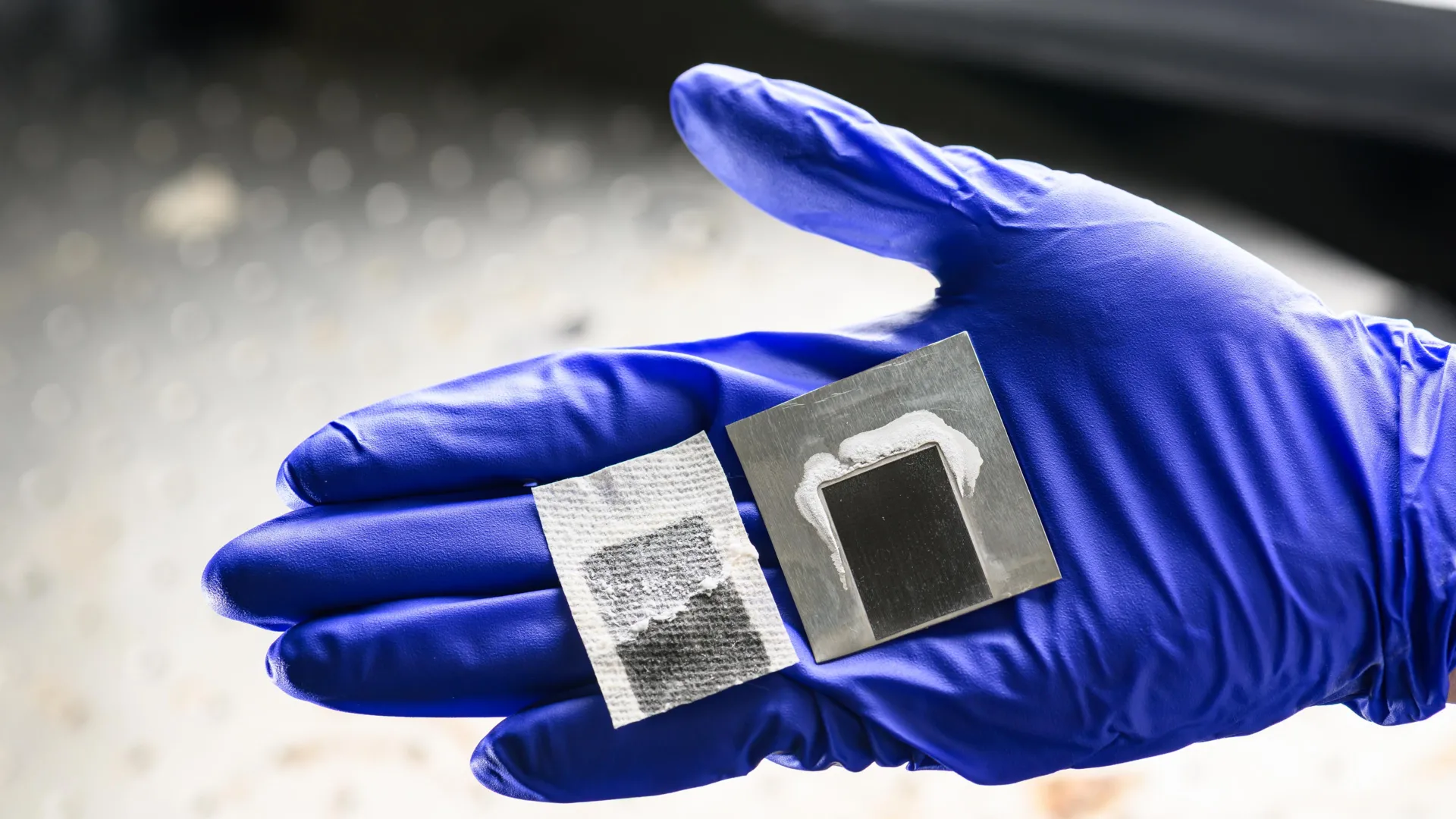
At the heart of the University of Rochester’s system is a laser-textured black metal panel engineered for two simultaneous tasks: converting sunlight into heat to evaporate seawater and managing salt deposits without intervention. The laser treatment creates microscopic grooves and spikes that boost surface area and solar absorption beyond typical black coatings.
As water evaporates, salts concentrate and begin crystallizing. Instead of allowing these crystals to clog the surface, the panel’s microstructure and thermal gradients drive salt crystals to migrate autonomously toward designated collection zones. This movement hinges on subtle gradients in surface tension and temperature, eliminating the need for mechanical cleaning or chemical additives.
Recovering nearly all dissolved salts as solids marks a departure from traditional desalination, which discharges brine back into the environment. This solid salt recovery could reduce ecological harm and even enable extraction of valuable minerals like lithium, critical for batteries. The design also skips chemical pretreatment, simplifying operation and cuts costs.
Field tests with seawater from multiple oceans showed continuous evaporation without clogging or efficiency loss over extended periods. Modular panel arrays suggest scalability, adaptable to different water volumes.
Still, balancing maximum evaporation with reliable salt removal is delicate. The system’s long-term durability under harsh marine conditions and its precise control of salt migration remain open questions. Potential fouling or mechanical degradation could undermine performance over time.
Challenges and Considerations
This system’s innovation is clear, but practical hurdles loom large. The laser-textured panels depend on maintaining delicate microstructures to function as intended. Real-world marine environments—abrasion from particles, biofouling organisms, salt spray, UV exposure—pose threats that the study only lightly addresses. How these factors degrade the panels’ hydrophilic and photothermal properties over months or years is uncertain.
The autonomous salt migration mechanism is sensitive to environmental variables: temperature swings, salinity shifts, wave action. While lab-scale tests are promising, scaling up could reveal uneven salt patterns or clogging under complex conditions. Biofouling, which can alter surface wettability, adds another layer of unpredictability.
The claim of near-complete salt recovery and mineral extraction, including lithium, is conceptually attractive but economically unproven. Extracting trace minerals from solid salt residues requires additional processing steps not covered in this research. The energy and cost balance of integrating mineral recovery with desalination could complicate the system’s sustainability profile.
Environmental questions also linger around the fate of accumulated solid salts. Without clear strategies for collection, storage, or reuse, the technology risks transferring environmental burdens rather than eliminating them.
In short, transitioning from a controlled prototype to reliable, large-scale desalination infrastructure involves navigating material durability, operational resilience, and environmental management challenges that remain unresolved.
What This Means for Water and Resource Recovery
This solar desalination system offers a clever integration of evaporation and salt management, potentially reducing downtime and maintenance that plague many existing setups. Its ability to produce fresh water continuously without chemical pretreatment is a notable engineering feat.
However, real-world deployment will test the system’s reliance on precise surface textures and autonomous salt transport. Marine environments are unforgiving, with biofouling and mechanical wear threatening to degrade performance. The promise of recovering valuable minerals like lithium alongside freshwater is compelling but requires a hard look at downstream processing costs and logistics.
Handling solid salt byproducts at scale introduces new operational complexities and environmental considerations. While less harmful than brine discharge, solid salt accumulation demands robust management strategies.
For water-scarce regions and industries seeking sustainable desalination options, this technology presents an intriguing possibility—if it can prove durable, scalable, and economically viable beyond the lab. The road from innovation to impact remains steep and uncertain.