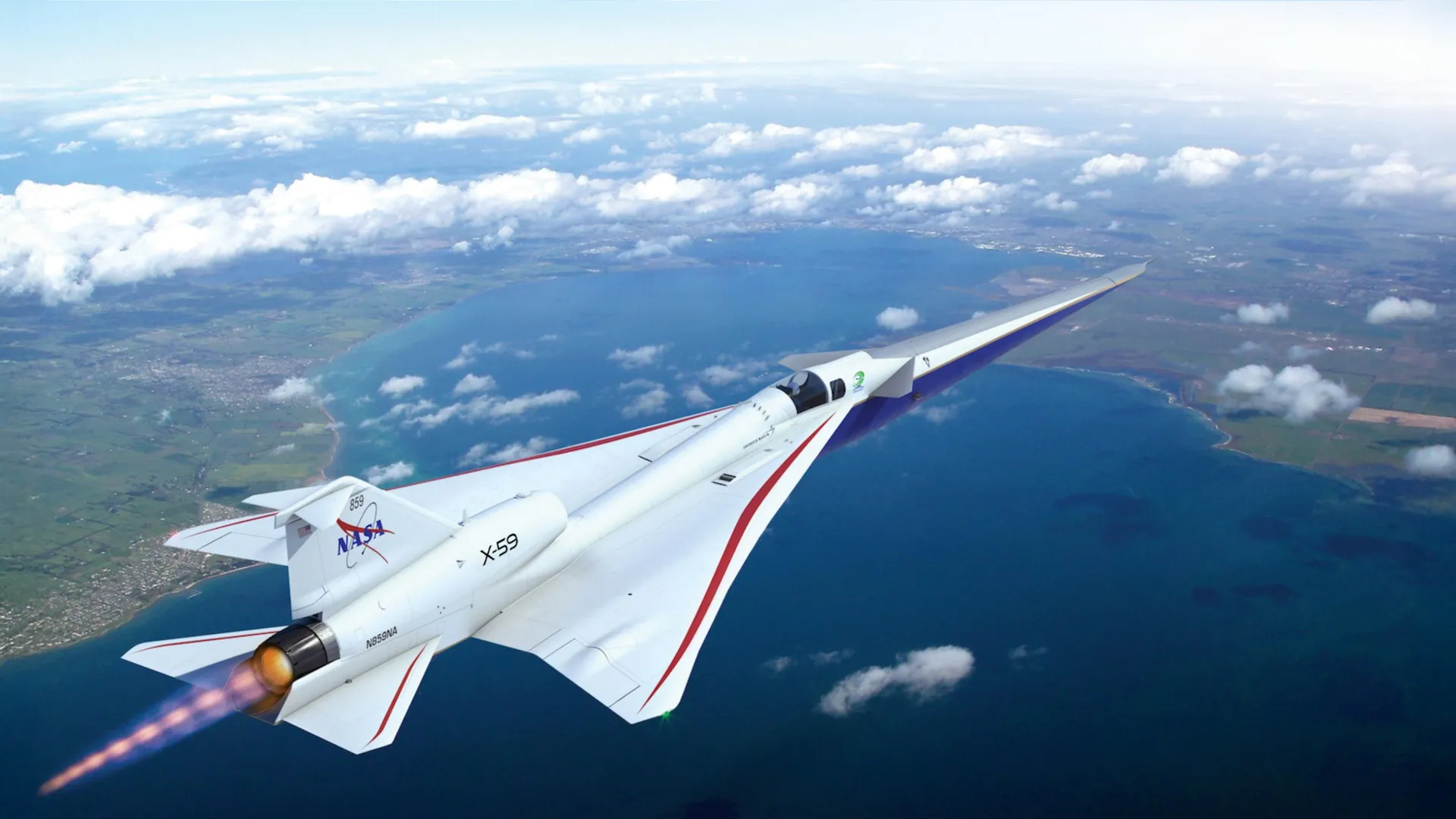
NASA’s X-59 Prepares for Supersonic Leap
NASA’s X-59 is gearing up for its first supersonic test flight, scheduled for early June 2026. The experimental aircraft aims to reach speeds of Mach 1.6 at high altitude, pushing past the sound barrier with a key difference: it’s engineered to replace the usual loud sonic boom with a much softer “thump.”
This quieter sonic signature could reshape the future of supersonic travel, making it possible to fly faster than sound over populated areas without the disruptive noise that grounded previous attempts. While initial flights won’t capture the quiet boom directly—thanks to noise from the accompanying chase plane—they will collect vital data on shock wave behavior and aircraft performance at these speeds.
Milestones in Testing and Flight Plans
The X-59’s journey toward supersonic flight is tightly scheduled. Early June 2026 marks the first planned break through the sound barrier. NASA aims for speeds around Mach 1.6, cruising high above 55,000 feet. This altitude helps isolate the sonic effects from ground observers.
Before that milestone, the team completed a series of ground and taxi tests through 2025 to validate the aircraft’s systems. These steps ensured the X-59 could safely handle the stresses of supersonic speeds. Then came subsonic flight tests to refine controls and gather performance data.
The initial supersonic runs won’t showcase the signature quiet “thump.” That’s because a chase plane will accompany the X-59, its noise masking the low-level sonic boom. Instead, these flights focus on collecting precise data about shock waves and aerodynamic behavior at supersonic velocity.
This data is critical. It informs the next phase, where NASA will attempt to capture the quiet sonic signature directly over communities. Success there could reshape regulations and open the door for commercial supersonic travel above populated areas.
Each test builds on the last, steadily moving from theory to real-world demonstration. The X-59’s methodical flight plan reflects the complexity of taming supersonic noise—a challenge that has stalled civilian supersonic flight for decades.
Design Goals for Quiet Supersonic Travel
NASA’s X-59 tackles supersonic flight’s biggest hurdle: the sonic boom. Traditional supersonic jets create loud, disruptive booms that restrict where they can fly at high speeds—mostly over oceans or unpopulated areas. The X-59 aims to change that by reshaping shock waves to generate a much quieter “thump,” barely audible on the ground.
Achieving this requires precise aerodynamic design. The aircraft’s long, slender nose and carefully contoured fuselage spread out pressure waves, reducing their intensity. This quiet supersonic signature could allow commercial planes to fly faster over land without disturbing communities below.
The upcoming test flights focus on validating these design principles under real conditions. While initial supersonic runs won’t capture the quiet boom directly—chase plane noise will interfere—they will collect crucial data on how shock waves form and interact at altitude and speed. This data will inform refinements before the X-59’s quieter sonic signature is officially measured.
If successful, the X-59 could unlock supersonic travel routes previously off-limits, cutting international flight times dramatically. But the challenge remains steep: balancing speed, noise reduction, and fuel efficiency in a single package. The X-59’s design goals reflect a careful negotiation of these factors, aiming to prove quiet supersonic flight is not just possible, but practical.
What This Means for Aviation
The X-59 program could reshape commercial aviation if it delivers on its promise to quiet the sonic boom. Current regulations ban supersonic flights over land because of the disruptive noise, limiting supersonic travel to oceanic routes. NASA’s efforts to replace the traditional boom with a softer “thump” aim to open airspace previously off-limits to supersonic jets. That means airlines might one day offer faster transcontinental flights without the usual noise complaints or regulatory roadblocks.
For aircraft manufacturers, the X-59’s design and flight data provide a blueprint for integrating low-boom technology into future commercial models. But the challenge isn’t just technical; it’s also regulatory and economic. Certifying new supersonic aircraft will require updated noise standards and community acceptance, which depend heavily on proving the quieter sonic signature in real-world conditions.
Passengers stand to gain from shorter flight times, but ticket prices and environmental impacts remain open questions. Supersonic engines tend to consume more fuel, so efficiency improvements must keep pace with noise reduction to make these jets viable and sustainable.
In policy circles, the X-59’s outcomes will influence international standards on supersonic flight. If NASA’s quieter sonic boom can be validated, it could prompt the International Civil Aviation Organization to revise noise restrictions, paving the way for broader adoption.
Still, the path from experimental aircraft to commercial service is long. The upcoming test flights will be closely watched, but they represent just the start of a complex process involving engineering, regulation, and market demand. The X-59’s success or failure will ripple across aerospace industries and could redefine what’s possible in high-speed air travel.

Global Digests News delivers timely, credible coverage of world affairs, politics, economy, and technology to keep you informed on today’s top stories.

AI Advances in Flood Forecasting
Google’s open-source AI hydrology framework offers customizable flood forecasting powered by LSTM networks. Validated with Czech data, it b…

EVA-Bench Data 2.0 Expands Enterprise Voice Agent Testing
EVA-Bench Data 2.0 broadens enterprise voice agent evaluation with three new domains—airline customer service, IT service management, and h…

Tech Sovereignty in Europe: Shifting Away from US Solutions
Europe is pushing to reduce dependence on US technology through the European Tech Sovereignty Package. Leading research bodies like France’…

Andreessen Claims AGI Has Arrived, Sparking Industry Debate
Marc Andreessen told Joe Rogan that AGI was reached in early 2026 by models like GPT-5.5 and Gemini 3.0. OpenAI’s Sam Altman remains cautio…
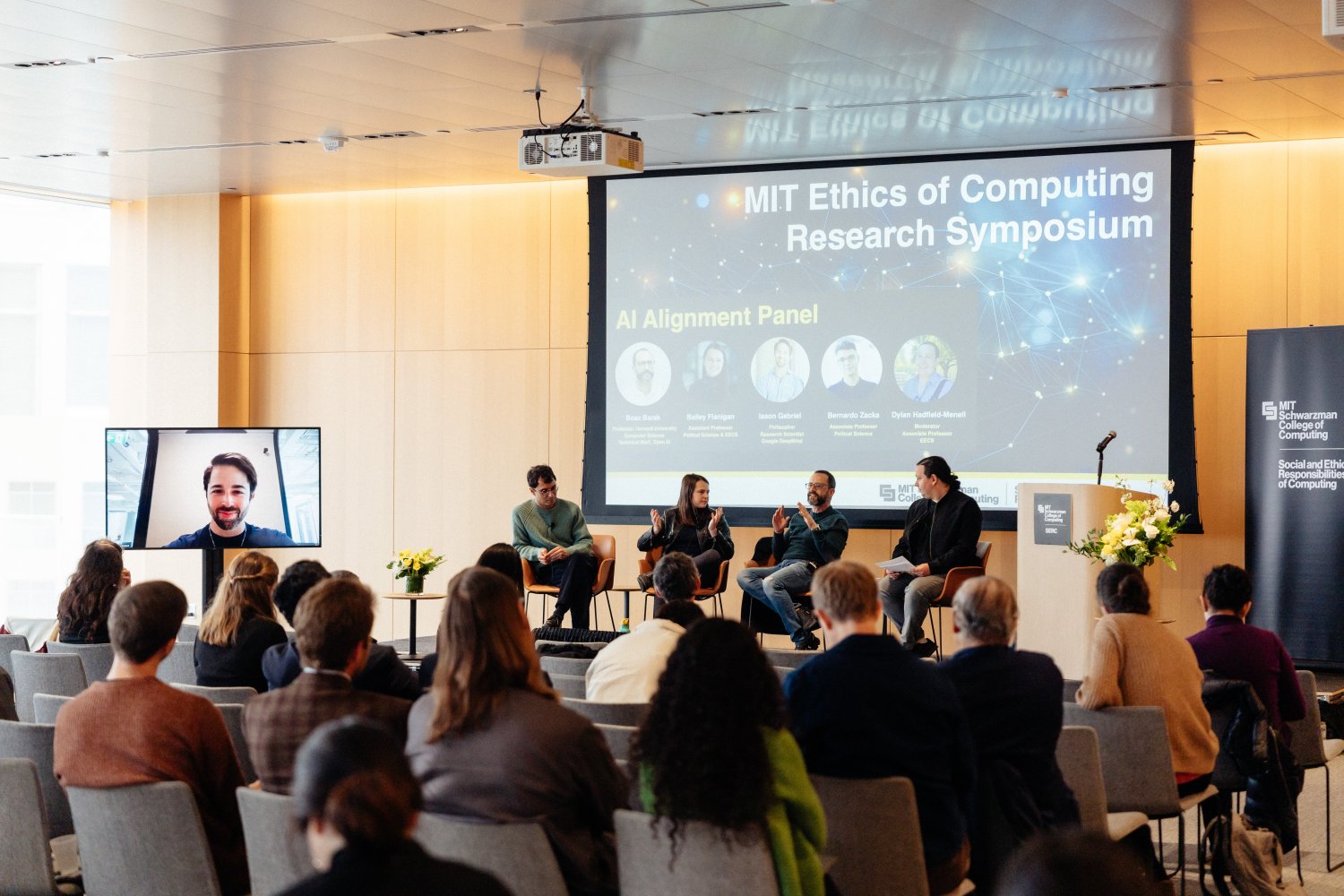
Human Judgment Remains the Linchpin in AI Ethics, MIT Symposium Shows
The MIT Ethics of Computing Research Symposium emphasized that AI can’t navigate ethics alone. Experts highlighted the challenge of alignin…

Early Literacy Gains in Summer: Everyday Moments That Matter
Summer’s unstructured days are fertile ground for early literacy growth. Simple daily interactions—talking, singing, reading signs—build la…

Reid Hoffman Leaves Microsoft Board to Lead AI Drug Discovery Startup Manus
Reid Hoffman steps down from Microsoft’s board after ten years to focus on Manus, an AI-driven drug discovery startup targeting cancer trea…

AI and Fundamental Physics: NSF Renews Support for IAIFI
The National Science Foundation has expanded funding for MIT’s Institute for Artificial Intelligence and Fundamental Interactions, advancin…