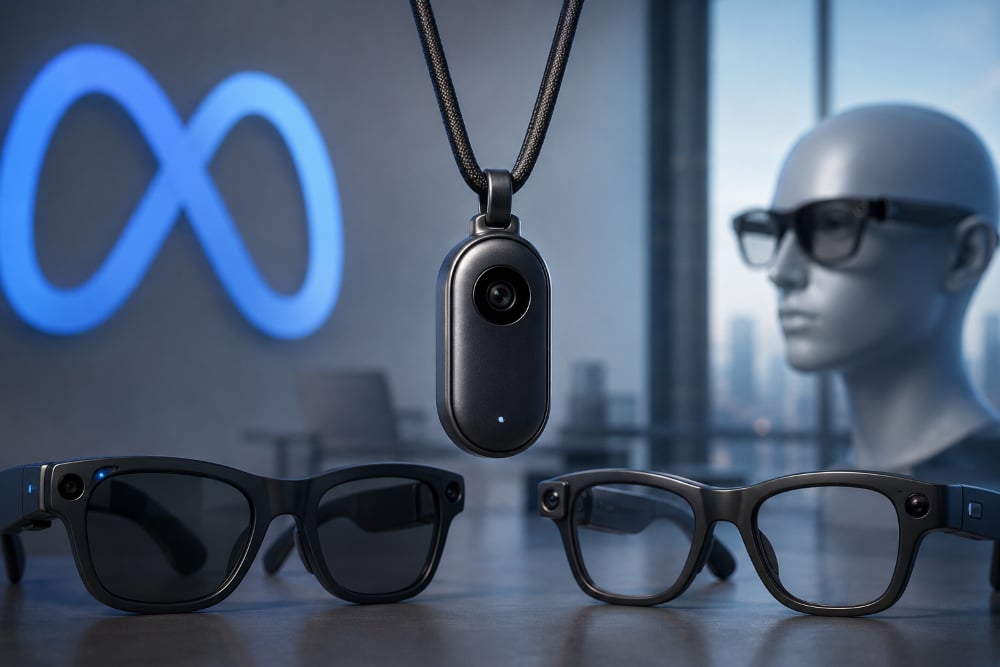
Meta’s New AI Wearables Take Shape
Meta is accelerating its wearable AI ambitions with a new lineup that includes an AI-powered pendant and several smart glasses models. The pendant, a direct outcome of Meta’s acquisition of Limitless, promises continuous AI assistance by actively capturing and processing spoken interactions. This marks a clear pivot from passive wearable tech to devices designed for real-time, always-on conversational engagement.
Alongside consumer-focused glasses, Meta is targeting enterprise users through a “Wearables for Work” subscription, signaling a push to embed AI tools deeply into professional environments. Yet, this expansion isn’t without friction. The continuous audio monitoring at the heart of these devices raises immediate privacy red flags, especially given Meta’s history with data sensitivity issues. The technical sophistication is evident, but so is the risk landscape—balancing seamless AI integration against potential surveillance concerns will be critical as these products hit the market.
Product Launches and Market Focus
Meta’s latest announcements reveal a strategy to broaden its wearable AI portfolio beyond smart glasses. The AI-powered pendant stands out, leveraging Limitless’s continuous conversation monitoring technology. Unlike earlier wearables that responded to commands, this pendant listens, records, and analyzes speech constantly, offering real-time assistance. That persistent ambient intelligence introduces complex questions about data handling and user consent.
Multiple new smart glasses models are also in development, tailored for distinct segments from casual users to enterprise clients. The “Wearables for Work” subscription service aims to accelerate AI adoption in professional settings, potentially streamlining workflows but also raising flags about workplace surveillance and data privacy.
While the timeline remains tentative, Meta expects to release the pendant and initial glasses within the next year. Reality Labs, despite prior financial losses, is doubling down on wearable AI. The aggressive integration of continuous listening demands rigorous privacy safeguards and transparent controls—areas where Meta’s track record invites close scrutiny.
Privacy Challenges and User Concerns
The promise of AI-driven wearables that constantly listen comes with inherent tension between utility and privacy. Meta’s pendant elevates this by capturing and analyzing speech in real time. The challenge isn’t just hardware or AI refinement—it’s about managing sensitive, continuous data streams in unpredictable social settings. This raises thorny issues around data ownership, consent, and the inadvertent recording of bystanders who never agreed to be monitored.
Meta’s heavy reliance on cloud processing means data will flow beyond the user’s immediate control, exposing it to interception, unauthorized access, and algorithmic bias in interpretation. The company touts privacy protections, but details remain vague. Users must trust Meta with intimate slices of daily life—a trust repeatedly tested by past data controversies.
Enterprise adoption raises the stakes further. Organizations must navigate compliance with regulations like GDPR and HIPAA, especially if employee conversations are captured without clear boundaries. Data leaks or misuse could invite legal trouble and dampen adoption.
User comfort is another hurdle. Constant listening presumes acceptance of always-on devices, but social norms around conversation privacy are deeply ingrained. The prospect of being recorded—even consensually—can alter behavior or lead users to disable features, undermining the devices’ value.
Meta’s wearable AI push is as much a privacy gamble as a technical feat. Success will depend on transparent safeguards and a realistic grasp of user trust, beyond marketing assurances.
What This Means for Wearable AI
Meta’s wearable AI expansion signals a shift in how these devices might weave into daily life and work. The pendant’s continuous listening is innovative but triggers serious privacy concerns. Users and businesses must weigh convenience against risks of sensitive conversations being recorded or exposed.
The “Wearables for Work” subscription suggests Meta is betting on enterprise scale, but organizations need to scrutinize data governance before deployment. These wearables will require new protocols for consent, encryption, and user control.
The promise of always-on AI assistance may boost productivity but raises the stakes for security lapses. Engineers and IT teams should prepare for complex integration challenges—technical, ethical, and legal. Meta’s roadmap reveals a tension: advancing AI capabilities while managing fallout from persistent monitoring. The critical question is not just what these devices can do, but what they might unintentionally reveal.
Global Digests News delivers timely, credible coverage of world affairs, politics, economy, and technology to keep you informed on today’s top stories.