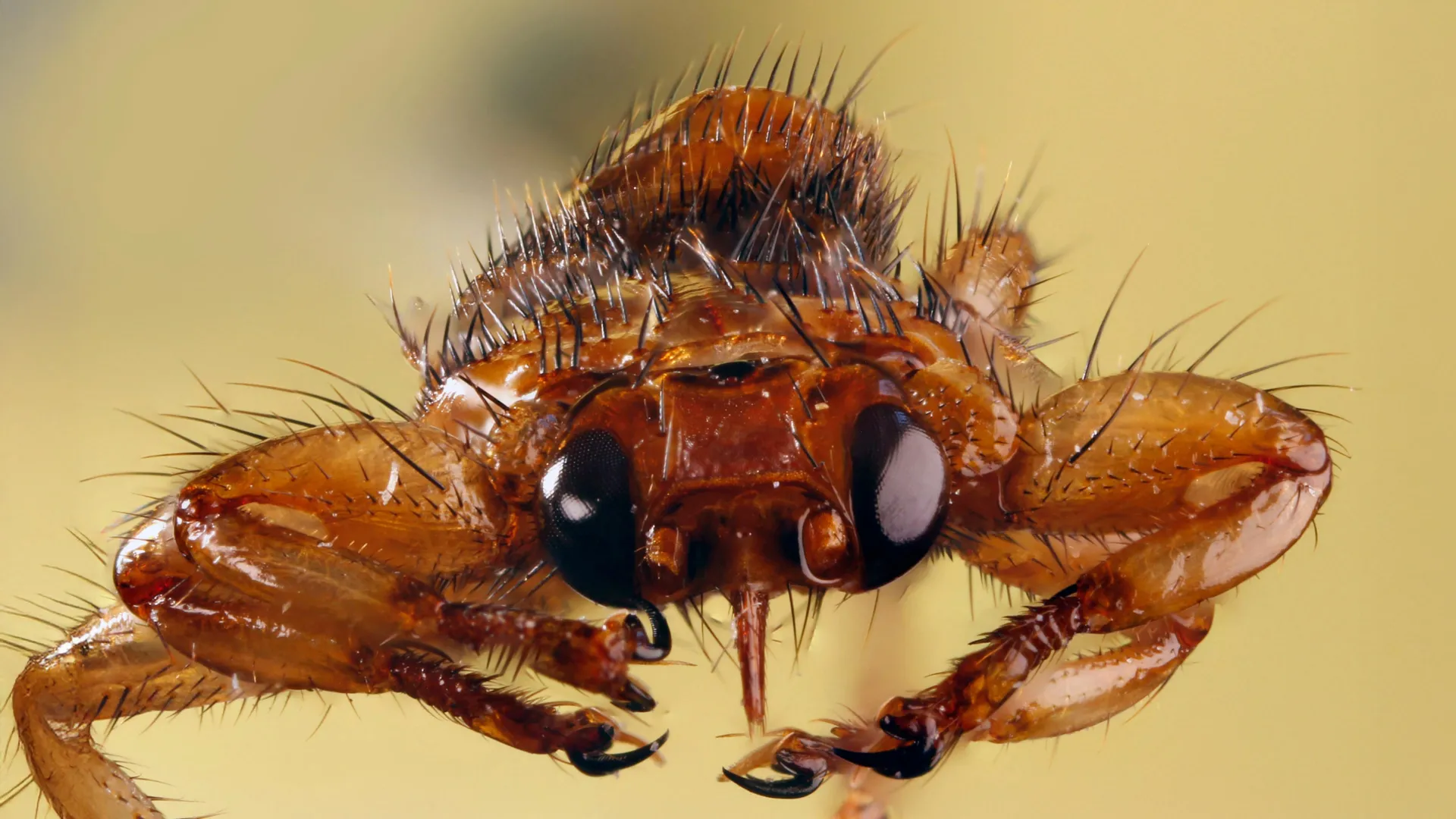
How Deer Keds Adapt Their Senses and Behavior
Deer keds undergo a striking sensory and behavioral transformation once they secure a host. Initially, these blood-feeding flies rely heavily on flight and keen vision to find their target. But the moment they land, they shed their wings permanently—a one-way ticket to a grounded existence. This irreversible shift is more than physical; it’s genetic. Researchers have documented a roughly 50% reduction in the activity of genes tied to visual sensitivity. The flies don’t lose sight entirely, but their vision dims significantly.
Why dial down eyesight? The evidence points to a calculated energy trade-off. Maintaining sharp vision demands resources that deer keds now redirect toward feeding and reproduction. Their sensory system adapts to a parasitic lifestyle where flight and acute vision are less critical than efficient blood feeding. This metabolic reallocation highlights a vulnerability: the parasite’s survival hinges on a narrow balance of sensory function and energy use. Understanding these genetic and behavioral adjustments opens a window into potential control strategies that exploit these energetic compromises.
Genetic Downregulation of Vision After Host Landing
After deer keds settle on a host, their biology undergoes a marked shift. Central to this transformation is the genetic downregulation of visual function. Researchers documented a roughly 50% decrease in the expression of genes tied to visual sensitivity shortly after the keds land. This reduction isn’t a complete shutdown but a substantial dampening of their eyesight capabilities.
The timeline is precise: within hours of wing shedding—a permanent event signaling their transition to a host-bound existence—these gene expression changes take hold. The keds no longer need acute vision for flight or host detection; instead, their energy budget reallocates toward sustaining blood feeding and reproduction. Maintaining high visual acuity would be metabolically expensive and unnecessary once they are fixed on their target.
This genetic modulation reflects a strategic trade-off. By dialing down vision-related genes, deer keds conserve energy that would otherwise fuel complex neural processing and photoreceptor maintenance. The study’s molecular data reveal that the downregulation targets multiple components of the visual pathway, indicating a coordinated suppression rather than isolated gene effects.
Such adaptation is not merely behavioral but deeply embedded in their genome’s regulatory mechanisms. It underscores how parasitic insects optimize resource allocation by tuning sensory systems to their life stage and environment. The partial retention of vision genes suggests a baseline capability remains, possibly for minimal light detection or circadian regulation, rather than full visual function.
Understanding this genetic shift opens avenues for targeted interventions. Disrupting the regulatory pathways controlling vision gene expression might expose vulnerabilities during the host transition phase. It also raises questions about how flexible these sensory changes are—whether environmental factors or host cues influence the degree of downregulation and how quickly keds can adjust if displaced.
This genetic downshift in vision exemplifies the energetic compromises parasites accept. It’s a calculated sacrifice, trading sensory precision for metabolic efficiency, with consequences that ripple through their survival strategies and potential control methods.
Balancing Vision Loss and Survival Efficiency
The downregulation of visual genes in deer keds after host attachment is striking but far from absolute. While the study reports about a 50% reduction in visual sensitivity gene expression, this partial rather than total loss suggests residual visual capacity persists. What remains unclear is how this diminished vision functions in a cluttered, dynamic environment on the host’s body. Can the keds still detect changes in light or movement that might signal host grooming or predation risk? If so, the sensory trade-off may be more nuanced, balancing energy savings with minimal situational awareness.
Moreover, the permanent shedding of wings eliminates the option for host escape or relocation, locking the parasite into a single host. This behavioral fixation raises questions about vulnerability: if the host dies or is treated with insecticides, the wingless parasite’s survival chances plummet. The adaptive benefit of energy conservation through vision loss and wing shedding must be weighed against these increased risks. The evolutionary calculus here is complex—energy saved on sensory maintenance and flight muscles can be redirected to reproduction, but at what cost to flexibility and resilience?
Another layer of uncertainty lies in the genetic mechanisms driving these changes. The study identifies downregulated genes but does not fully resolve whether this modulation is reversible or fixed epigenetically. If environmental triggers or host factors influence gene expression dynamically, the parasites might retain some plasticity to adjust vision-related functions if conditions demand it. Without such plasticity, the adaptation could become a liability under shifting ecological pressures, such as changes in host availability or climate.
Finally, the broader ecological context matters. Deer keds’ adaptations evolved under specific host-parasite dynamics. Introducing control measures that exploit these sensory and behavioral constraints may seem promising, but unintended consequences—such as selection for more cryptic or resistant variants—could emerge. The interplay of genetic downregulation, behavioral rigidity, and environmental variability complicates straightforward intervention strategies.
In sum, the trade-offs in vision and survival efficiency in deer keds reveal a finely balanced system with inherent vulnerabilities and uncertainties. The energy conserved through sensory reduction is not a free lunch; it imposes constraints that may limit adaptability and expose new risks, warranting cautious interpretation of these findings in applied contexts.
What This Means for Parasite Control Strategies
Deer keds’ drastic shift from flight-reliant hunters to stationary parasites exposes a critical vulnerability: their reliance on a single host after wing loss. By dialing down visual genes, they conserve energy but lose the ability to relocate if dislodged. This trade-off suggests control strategies might exploit moments when these parasites are forced off their hosts—whether through grooming, environmental disturbance, or targeted repellents—since their impaired vision hampers reattachment or escape.
Moreover, interventions that disrupt the delicate balance between sensory investment and survival could tip the scales against deer keds. For instance, approaches that increase host grooming frequency or introduce stimuli that confuse their reduced visual system might reduce infestation rates. The genetic downregulation of vision also hints at a narrow window for vulnerability: before wing shedding, deer keds depend on flight and sharp vision, which could be targeted by traps or visual lures.
Understanding these energetic compromises offers a roadmap for control measures that don’t rely solely on chemical treatments. Instead, they can leverage behavioral and sensory weaknesses inherent to the parasite’s lifecycle. This layered perspective is crucial because it moves beyond blunt-force eradication toward nuanced disruption—potentially reducing resistance development and collateral ecological impact.