Hydrogel Seed Coatings: New Approach from Nazarbayev University
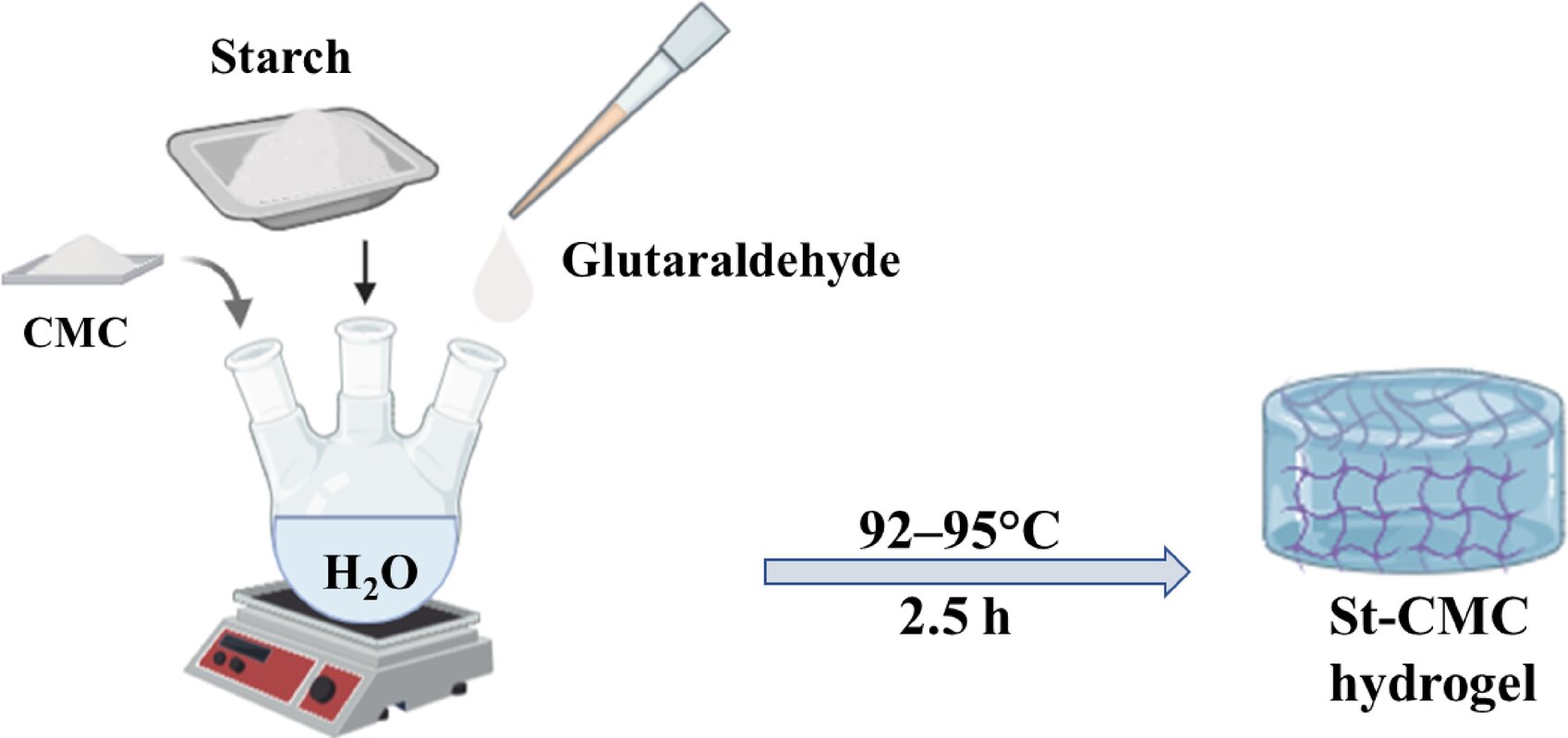
Nazarbayev University researchers have engineered a starch and carboxymethyl cellulose-based hydrogel coating for seeds that can absorb an impressive 17.5 grams of water per gram of material. This level of water retention is notable because it directly targets one of agriculture’s persistent challenges: seed germination under dry soil conditions. By effectively locking in moisture, these coatings promise to boost early plant development, a critical phase often hampered by water scarcity.
The innovation doesn’t stop at absorption. These hydrogels biodegrade in soil by roughly 67%, a marked improvement over traditional petroleum-derived superabsorbents that linger long after their utility. The team’s experiments with sugar beet seeds showed that seedlings from coated seeds grew twice as long as those without treatment, suggesting a tangible benefit in real-world conditions. Adding wood ash into the mix also appears to supply essential minerals while preserving the hydrogel’s moisture-holding capacity, potentially delivering a twofold advantage: hydration and nutrient support. Yet, while the initial data are promising, questions remain about the coatings’ performance across diverse soil types and climates, as well as their long-term environmental impact—factors that warrant further rigorous testing before widespread agricultural adoption.
Performance Gains and Biodegradability Metrics
The core innovation centers on hydrogels synthesized from starch and carboxymethyl cellulose, demonstrating a remarkable water absorption capacity of up to 17.5 grams per gram of polymer. This figure notably surpasses many traditional biodegradable hydrogels, positioning the material as a strong candidate for enhancing seed hydration in arid environments. Developed at Nazarbayev University, the hydrogel coatings were tested on sugar beet seeds, where treated seeds exhibited a twofold increase in seedling length relative to untreated controls—a clear indication of improved germination vigor linked to the hydrogel’s moisture retention.
Biodegradability metrics add another layer of interest. The hydrogel showed approximately 67% degradation in soil environments over a defined period, a promising sign of environmental compatibility compared to persistent synthetic superabsorbents. However, the degradation timeline and byproducts were not exhaustively detailed, leaving open questions about the long-term ecological footprint and potential accumulation effects in varied soil types.
Incorporating wood ash into the hydrogel matrix introduces a dual function—supplying essential minerals while preserving the hydrogel’s water retention capacity. This modification hints at a multifunctional coating strategy, potentially reducing the need for separate fertilization steps during planting. Yet, the interaction between wood ash components and hydrogel degradation pathways requires further elucidation to rule out any unintended impacts on soil microbiota or seedling health.
While the reported performance gains are compelling, the data primarily reflect controlled experimental conditions. Real-world variability in soil composition, microbial activity, and climate stressors could influence both water absorption efficiency and biodegradation rates. Comprehensive field trials remain necessary to validate scalability and consistent effectiveness. Moreover, safety assessments regarding potential phytotoxic effects or residual compounds from hydrogel breakdown are essential before recommending widespread agricultural adoption.
In essence, the starch-carboxymethyl cellulose hydrogel coatings represent a technologically sound approach to improving seed germination under moisture-limited conditions, with encouraging biodegradability profiles. Yet, the path from laboratory success to field reliability is not fully mapped, warranting cautious optimism and a call for deeper, context-specific testing.
Remaining Challenges for Field Application
The promising water absorption and biodegradability figures reported for these starch-based hydrogels mark a notable advance, but several practical uncertainties linger before field deployment can be confidently recommended. The laboratory conditions under which the 17.5 g/g water uptake was measured may not fully replicate the complex soil environments where factors like temperature fluctuations, microbial diversity, and soil chemistry vary widely. These variables can influence both the hydrogel’s swelling behavior and its degradation rate, potentially altering the expected moisture retention and nutrient release profiles.
Moreover, the reported 67% biodegradation over a certain timeframe leaves open questions about the fate of the residual material and any intermediate breakdown products. Without detailed toxicological assessments, it’s premature to assume complete environmental safety. The interaction of these hydrogels with native soil microbiomes, especially over multiple crop cycles, remains unexplored. Could the coatings inadvertently disrupt microbial communities critical to soil health or nutrient cycling?
The incorporation of wood ash as a mineral additive adds another layer of complexity. While it may enhance nutrient availability, wood ash composition can vary significantly depending on its source and combustion conditions, raising concerns about potential contaminants such as heavy metals. The long-term accumulation effects of repeated applications have yet to be quantified.
From an agronomic perspective, scaling from sugar beet seed trials to a broader range of crops and soil types demands caution. Seed coating uniformity, durability during handling and planting, and compatibility with existing seed treatment processes require thorough validation. The economic implications—cost of materials, manufacturing, and potential yield benefits—also need rigorous analysis to justify adoption.
In sum, while the initial data are encouraging, the path from lab-scale innovation to reliable, sustainable agricultural tool is fraught with variables that warrant comprehensive field testing and environmental risk assessment. Only then can these hydrogels move beyond promising prototypes to trusted components in crop production systems.
What This Means for Sustainable Agriculture
The introduction of these biodegradable hydrogel coatings offers a tangible tool for farmers grappling with water scarcity and soil degradation. By holding water close to the seed, they can boost germination rates where traditional irrigation is limited or unreliable. This could translate into more consistent crop stands and potentially higher yields in drought-prone regions.
Yet, the technology is not a plug-and-play solution. The reported 67% biodegradability is encouraging but leaves open questions about the fate of residual materials in diverse soil ecosystems. Long-term field trials will be essential to confirm that breakdown products do not accumulate or disrupt microbial communities.
Moreover, the integration of wood ash to supply minerals hints at a multi-functional approach, but it also complicates the formulation. Variability in ash composition and potential contaminants must be carefully managed to avoid unintended soil chemistry shifts.
For now, these hydrogels represent a promising step toward sustainable seed treatments that reduce dependence on synthetic polymers and excessive water use. However, scaling from lab to field will require rigorous testing across different crops, soils, and climates to validate efficacy and environmental safety. Careful monitoring and adaptive management will be key to unlocking their full potential without introducing new risks.

Global Digests News delivers timely, credible coverage of world affairs, politics, economy, and technology to keep you informed on today’s top stories.

AI Advances in Flood Forecasting
Google’s open-source AI hydrology framework offers customizable flood forecasting powered by LSTM networks. Validated with Czech data, it b…

EVA-Bench Data 2.0 Expands Enterprise Voice Agent Testing
EVA-Bench Data 2.0 broadens enterprise voice agent evaluation with three new domains—airline customer service, IT service management, and h…

Tech Sovereignty in Europe: Shifting Away from US Solutions
Europe is pushing to reduce dependence on US technology through the European Tech Sovereignty Package. Leading research bodies like France’…

Andreessen Claims AGI Has Arrived, Sparking Industry Debate
Marc Andreessen told Joe Rogan that AGI was reached in early 2026 by models like GPT-5.5 and Gemini 3.0. OpenAI’s Sam Altman remains cautio…

Human Judgment Remains the Linchpin in AI Ethics, MIT Symposium Shows
The MIT Ethics of Computing Research Symposium emphasized that AI can’t navigate ethics alone. Experts highlighted the challenge of alignin…

Early Literacy Gains in Summer: Everyday Moments That Matter
Summer’s unstructured days are fertile ground for early literacy growth. Simple daily interactions—talking, singing, reading signs—build la…

Reid Hoffman Leaves Microsoft Board to Lead AI Drug Discovery Startup Manus
Reid Hoffman steps down from Microsoft’s board after ten years to focus on Manus, an AI-driven drug discovery startup targeting cancer trea…

AI and Fundamental Physics: NSF Renews Support for IAIFI
The National Science Foundation has expanded funding for MIT’s Institute for Artificial Intelligence and Fundamental Interactions, advancin…