Clarifying AI Agent Terminology
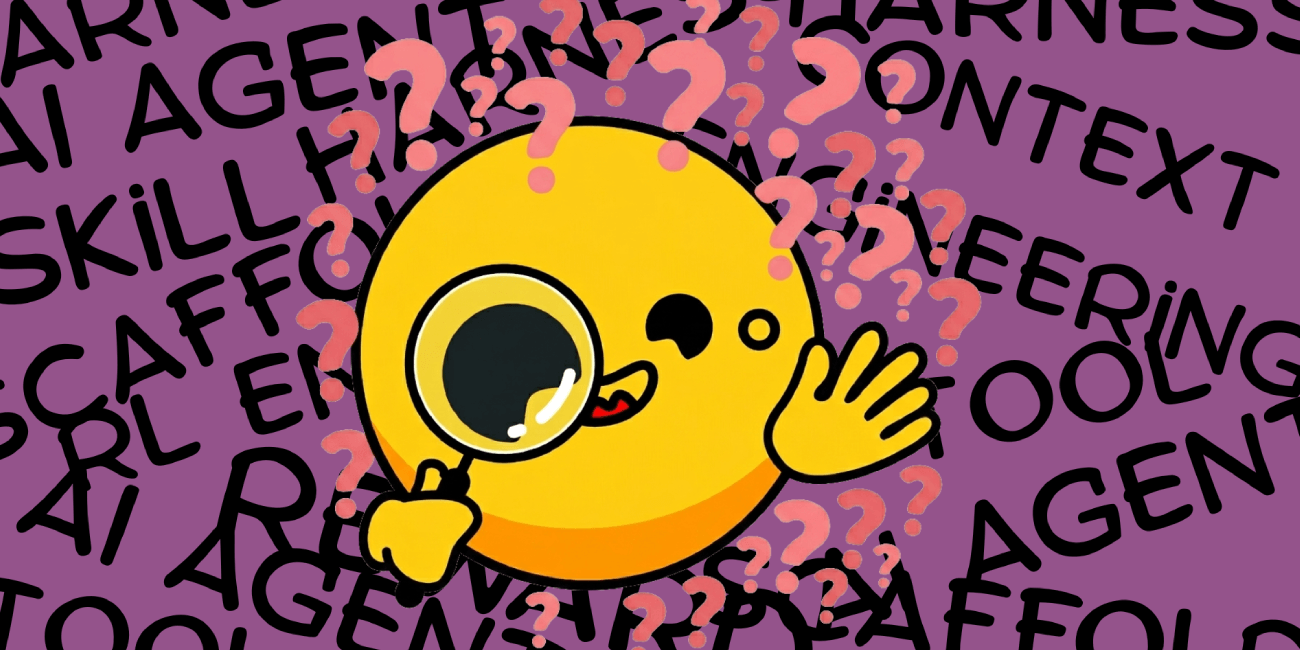
The AI world is full of jargon that often muddies practical understanding. Words like “harness,” “scaffold,” and “agent” get used as if interchangeable, but each points to a different part of the system. This confusion isn’t just theoretical—it affects how developers design AI and how users interpret what these agents actually do.
At the core is the model, usually a large language model (LLM), which generates text and powers the agent’s intelligence. The harness is the execution layer—it controls when and how the model runs, managing inputs, outputs, and orchestrating interactions. Scaffolds wrap around the model’s raw power, shaping behavior by adding structure, context, or constraints. Without clear distinctions, discussions about AI agents can spiral into ambiguity, slowing development and adoption. Sorting these terms out is essential as agent-based systems move from labs into real-world use.
Defining Core Components: Models, Harnesses, and Scaffolds
AI agent systems rest on three intertwined components: the model, the harness, and the scaffold. Each has a distinct function, though their boundaries often blur in casual talk.
The model—usually a large language model—is the engine generating text and processing input. Think of it as the raw brain trained on vast data to predict and produce language. Without it, there’s no intelligence to deploy.
The harness acts as the operational framework. It controls how the model interacts with its environment, manages inputs and outputs, and integrates external tools or APIs. It’s the agent’s nervous system, coordinating workflows and enforcing system constraints.
Scaffolds shape the model’s behavior through context and structure. They include prompts, templates, or predefined sequences that guide reasoning. Unlike the harness, which manages execution, scaffolds influence the internal logic directing the model’s responses.
This layered setup evolved as AI developers sought clearer terms to untangle overlapping concepts. Early work focused on models alone. As complexity grew, harnesses emerged to control execution. Finally, scaffolds appeared to shape behavior explicitly.
Ignoring scaffolds leaves the model unguided, risking erratic outputs. Without a harness, the agent lacks coordination and integration. And without a powerful model, there’s no intelligence to deploy. These three together define how agents function reliably and adaptably.
Related Concepts: Context Engineering, Policies, and Sub-Agents
Behind the scenes, context engineering quietly steers AI agents’ decisions. It frames the input the model receives, setting the environment and constraints. This shaping isn’t just about feeding data—it crafts the narrative the agent uses to tackle tasks. Context engineering often overlaps with policy design—rules that keep agents within ethical, legal, or practical boundaries.
Sub-agents add complexity. They’re specialized assistants within a larger agent, each handling specific subtasks or domains. Operating semi-independently, they feed results back to the main agent, enabling modular, scalable problem-solving. Sub-agents can have their own models, harnesses, or scaffolds tailored to their roles.
These concepts matter because they influence real-world agent performance. Context sets the scene, policies enforce guardrails, and sub-agents break down complexity. Together, they form the backbone of sophisticated AI agents—not just raw models running free, but coordinated systems with control and purpose.
Why Precise Definitions Matter for AI Development
Getting these definitions right isn’t just academic. When “model,” “harness,” and “scaffold” blur together, teams risk miscommunication that can cause flawed designs or wasted effort. Treating the harness as just another name for the model overlooks its critical role in orchestrating workflows and integrating tools—key for real-world use.
Clear terms also boost interoperability. As agents combine multiple sub-agents, tools, and policies, a shared vocabulary ensures components from different sources can work together smoothly. Without it, integration becomes guesswork, slowing innovation and complicating upkeep.
For investors and product managers, understanding these distinctions helps evaluate capabilities accurately. Mislabeling what an “agent” is can inflate expectations or hide technical debt. Policymakers need precise language to craft effective regulations, avoiding vague rules that either stifle progress or miss risks.
Sharp definitions shape who builds AI agents, how robust they are, and how responsibly they’re governed. Spending time upfront to nail down terms pays off in clearer collaboration, better products, and more informed decisions.
Common Questions on AI Agent Terminology

The model is the core large language model (LLM) generating text or responses. The harness acts as the execution layer, controlling how the agent runs—handling inputs and outputs, managing calls to the model, and orchestrating workflows. The scaffold shapes the model’s behavior by providing structured context, prompts, or constraints guiding its output. Each has a distinct role: model generates, harness manages, scaffold directs.
**How do scaffolds influence AI agent behavior?**
Scaffolds frame the model’s environment. They include prompt templates, example dialogues, or rules steering responses toward desired outcomes. By embedding context and constraints, scaffolds reduce randomness and improve consistency, making behavior more predictable and aligned with goals.
**What roles do tools, skills, and sub-agents play?**
Tools and skills extend agents beyond text generation, enabling actions like database queries, API calls, or calculations. Sub-agents are specialized assistants invoked by a primary agent to handle specific tasks. Together, they modularize complex workflows, letting agents operate effectively in dynamic settings.
**Why is clear terminology important for AI agent frameworks?**
Without precise terms, teams confuse concepts, complicating design and implementation. Clear language ensures developers, researchers, and users share understanding, enabling better communication, reliable systems, and easier integration. It prevents redundant work and supports rigorous evaluation of agent architectures.
Global Digests News delivers timely, credible coverage of world affairs, politics, economy, and technology to keep you informed on today’s top stories.