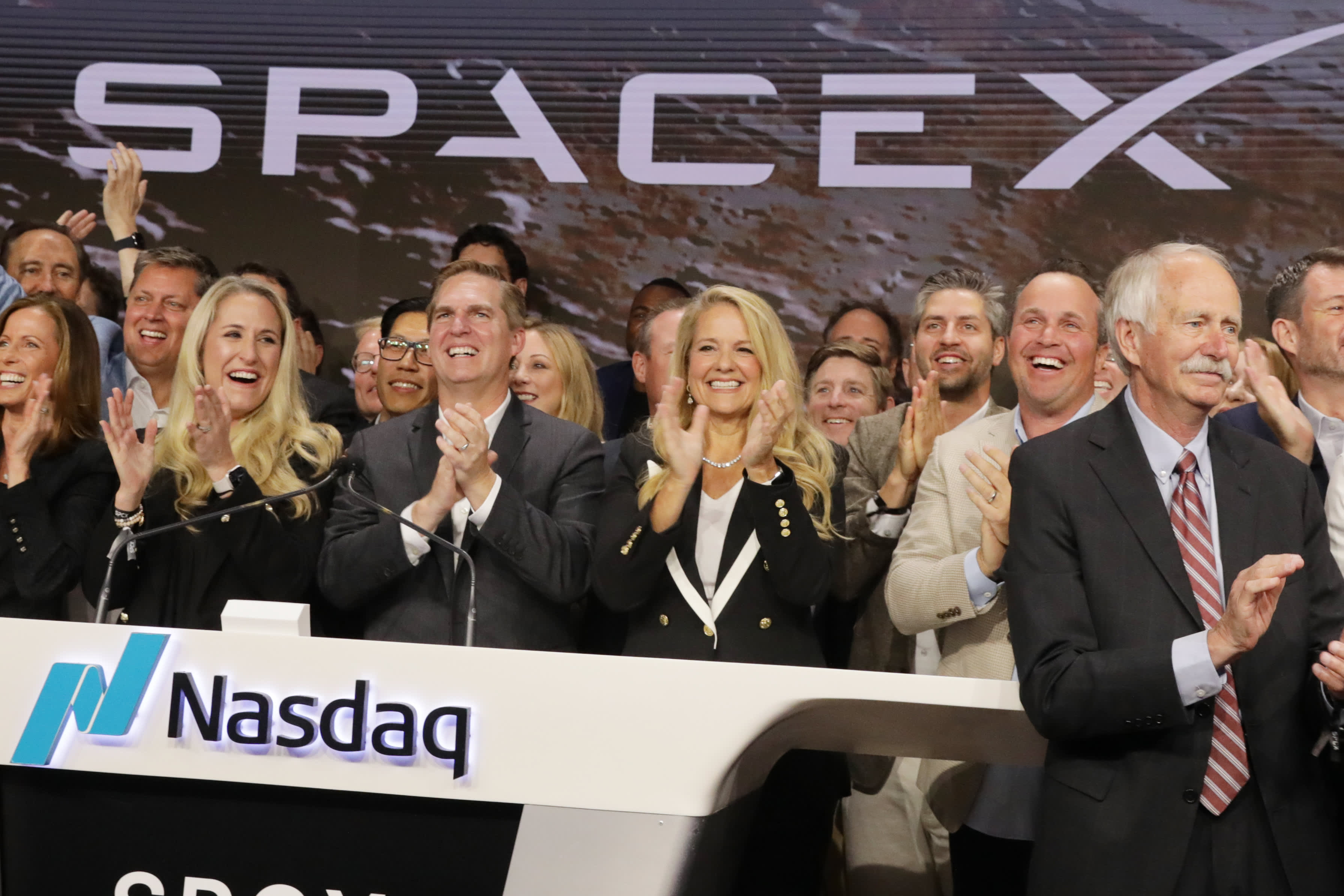
SpaceX’s Record-Breaking Market Debut
SpaceX’s public debut was a spectacle. Shares jumped more than 19% on day one, lifting its market value past $2 trillion. That ranks SpaceX among the world’s most valuable public companies—a remarkable achievement for a firm just opening to outside investors.
Retail buyers poured in, showing confidence in SpaceX’s bold growth plans. Elon Musk’s leadership remains a powerful draw, attracting both seasoned investors and everyday buyers eager to join the next phase of the space race. This IPO wasn’t just about raising funds; it reset expectations for what a space company can mean to public markets.
Investor Response and Industry Ripples
Investor enthusiasm was immediate and intense. The 19% surge vaulted SpaceX’s valuation into rarefied territory. Yet the impact rippled beyond SpaceX itself. Rival space stocks fell as investors rotated capital and reconsidered competitive dynamics. The market seemed to recalibrate, weighing SpaceX’s new public stature against peers.
Analysts flagged this as a defining moment for the space sector. It could reshape how investors value space ventures and set benchmarks for future tech IPOs, including those from companies like Anthropic and OpenAI.
Still, skepticism surfaced quickly. Some questioned whether SpaceX’s valuation fully accounts for challenges ahead—especially in the Starlink satellite business, where profitability remains unclear. Technical hurdles and regulatory complexities loom large.
This mix of excitement and caution captures the complexity of SpaceX’s market entry. Investors are betting on vision, but the road forward demands scrutiny.
What This Means for Space and Tech Markets
SpaceX’s IPO changes the game beyond its own balance sheet. A $2 trillion valuation signals strong faith in Elon Musk’s vision and SpaceX’s roadmap. But it also forces competitors to confront higher expectations and investor scrutiny.
The broader tech market now faces fresh questions about how to price innovation that’s still years from maturity. Retail investors, caught up in the IPO buzz, must weigh enthusiasm against the sector’s risks. Starlink, a key revenue driver, still wrestles with profitability and regulatory hurdles. High valuations don’t guarantee smooth sailing in such a capital-intensive, long-timeline industry.
Policy-wise, SpaceX’s rise may accelerate regulatory focus on satellite networks and orbital traffic management. Governments will need to keep pace with commercialization to avoid bottlenecks or conflicts in space.
This debut acts as a test case—highlighting space tech’s promise but also reminding us how unpredictable the frontier remains.
Key Points for Investors and Enthusiasts
SpaceX’s IPO wasn’t just a headline spike; it reflected real appetite for its long-term vision. The 19% first-day jump pushed its market cap past $2 trillion, joining the ranks of the world’s most valuable firms. That’s notable for a space company still navigating tech and regulatory hurdles.
Retail investors showed broad confidence, reassured by Musk’s leadership. But that also means SpaceX’s fate remains closely tied to his moves and public image. For anyone considering investment, tracking Musk’s decisions is as important as quarterly earnings.
Valuation calls for caution. Starlink’s profitability is uncertain, and competition in space tech is heating up. Investors should expect volatility and view SpaceX as part of a diversified portfolio, not a quick win.
This IPO offers a rare chance to own a stake in a company shaping space exploration and satellite internet’s future. But it’s a delicate balance between visionary potential and real-world execution. Enthusiasm must be tempered with clear-eyed risk assessment.
Global Digests News delivers timely, credible coverage of world affairs, politics, economy, and technology to keep you informed on today’s top stories.