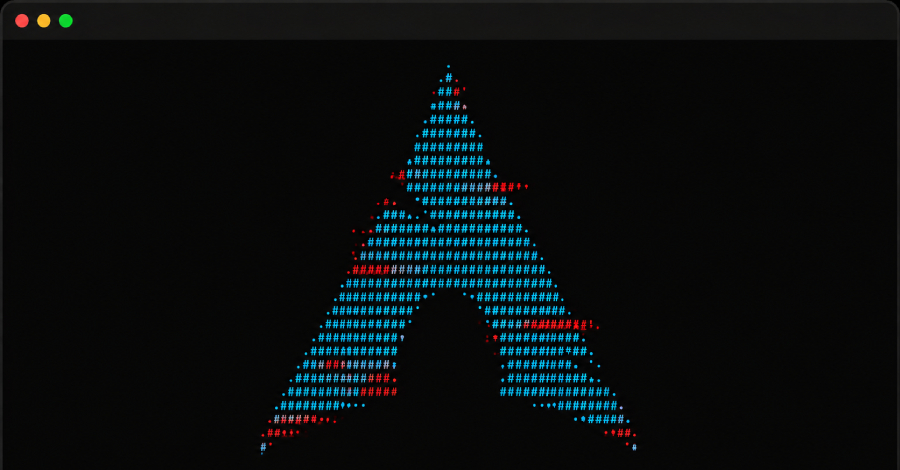
Hijacked Packages and Malicious Payloads
Attackers seized control of more than 400 Arch Linux AUR packages by exploiting the orphaned package takeover process. They inserted malicious build scripts that silently deploy a Rust-based credential stealer alongside an optional eBPF rootkit. This dual payload targets developer workstations, aiming straight for sensitive assets like browser cookies, SSH keys, GitHub tokens, npm credentials, Slack tokens, and VPN access.
The stealthy eBPF rootkit activates only under root privileges, masking its presence by hiding processes and network activity, making detection especially challenging. The scale and sophistication of this compromise underscore a critical vulnerability in the AUR’s package maintenance model, raising urgent questions about trust and verification in community-driven repositories.
Scope of the Attack and Targeted Credentials
The attack unfolded over several weeks in early June 2026, beginning with the takeover of orphaned Arch User Repository (AUR) packages. Attackers exploited the lack of active maintainers to publish modified build scripts in over 400 packages. These scripts introduced a Rust-based credential stealer designed to extract sensitive authentication tokens and keys from developer workstations.
Targets included a broad range of credentials: browser cookies, SSH private keys, GitHub personal access tokens, npm authentication tokens, Slack tokens, and VPN credentials. The attackers’ focus on developer environments suggests a deliberate strategy to gain persistent access and lateral movement capabilities within software development ecosystems.
In addition to the credential stealer, the compromised packages optionally deployed an eBPF (extended Berkeley Packet Filter) rootkit. This rootkit activates only when the attacker gains root privileges, allowing it to conceal malicious processes and network connections from standard system monitoring tools. Its use of eBPF, a powerful kernel-level tracing and filtering technology, complicates detection and removal, posing a heightened risk for long-term system compromise.
The timeline indicates a coordinated effort to hijack packages that had been inactive or abandoned, leveraging the trust users place in AUR’s decentralized model. The attackers’ ability to insert sophisticated payloads into widely used packages underscores systemic vulnerabilities in the package maintenance lifecycle and highlights the importance of continuous oversight.
Challenges in Detection and Verification
The detection and verification of this AUR compromise present a complex challenge. The attackers exploited orphaned packages, a known but often under-monitored vector, which complicates straightforward attribution. Many users rely on trust in package maintainers, yet the decentralized and volunteer-driven nature of AUR means that oversight is inherently uneven. This structural gap creates blind spots that automated scanners and manual reviews struggle to cover comprehensively.
Moreover, the malicious payloads themselves are engineered for stealth. The Rust-based credential stealer operates quietly, exfiltrating sensitive tokens and keys without triggering common heuristic alarms. Even more problematic is the optional eBPF rootkit, which leverages kernel-level hooks to mask its presence. Traditional antivirus solutions and system monitors often lack the visibility or privileges to detect such kernel-level manipulations, especially when the rootkit activates only under elevated privileges.
Verification efforts are further complicated by the need to distinguish legitimate package updates from tampered ones. Since the build scripts were altered subtly, users without cryptographic verification of package sources may not notice anomalies. However, even cryptographic signatures can be misleading if attackers gain control over package repositories or signing keys, a risk not fully addressed in this incident’s disclosures.
Finally, the scope of affected users and systems remains uncertain. The attack targeted developer workstations, but the degree to which downstream systems or automated build pipelines have been compromised is unclear. This ambiguity makes it difficult to assess the full operational risk and to tailor mitigation strategies effectively. In practice, this means that detection and containment require a multi-layered approach—combining behavioral monitoring, signature verification, and manual inspection—each with its own limitations and resource demands.
Practical Steps to Protect Your System
First, immediately audit all AUR packages you rely on, especially those recently updated or marked as orphaned. Check the package build scripts for unexpected Rust binaries or eBPF components—these are the red flags from this incident. Don’t blindly trust updates; verify signatures and hashes against official repositories or trusted mirrors.
Next, prioritize rotating any potentially exposed credentials. That includes SSH keys, GitHub tokens, npm credentials, and VPN logins. Assume compromise if you used affected packages on developer workstations. The Rust-based stealer targeted precisely these sensitive assets, so password changes alone won’t cut it—regenerate keys and revoke old tokens.
For detection, run thorough scans for unusual eBPF activity or hidden kernel modules. The optional rootkit in this attack hides processes and network connections, making traditional tools less effective. Employ kernel-level monitoring or specialized rootkit detection utilities designed for eBPF to catch stealthy intrusions.
If you have root access on compromised machines, consider isolating them immediately. The rootkit activates only with root privileges, so limiting privilege escalation can contain damage. In some cases, a full system reinstall remains the safest route. Partial cleanup risks leaving backdoors intact.
Finally, maintain a strict policy for orphaned packages. Avoid adopting or updating them without thorough vetting. The attackers exploited this exact gap to hijack over 400 packages. Community vigilance and tighter AUR maintenance protocols are essential to prevent recurrence.

Global Digests News delivers timely, credible coverage of world affairs, politics, economy, and technology to keep you informed on today’s top stories.
OWASP Foundation Taps Missie Lindsey to Lead Corporate Relations
Missie Lindsey brings 18 years of B2B marketing experience to OWASP Foundation as Director of Corporate Relations, aiming to deepen sponsor…
Cloudflare Boosts Security Scanning Capacity Over Tenfold
Cloudflare has expanded its global scan capacity from 10 to over 120 scans per second. This upgrade enables automatic, frequent security ch…

Digest: Google Introduces Generative AI Performance Report
Google has launched a new report within Search Console that tracks website visibility in generative AI features on Search and Explore. Curr…

Digest: Insights on Lookalike Domain Attacks
Lookalike domain attacks exploit human perception quirks rather than technical flaws, making them hard to detect with traditional security…
DataDome’s New Security Dashboard
DataDome’s redesigned homepage acts as a command center, offering real-time traffic data, blocked threat counts, and AI trust scores at log…
US Government Orders Suspension of Anthropic AI Model Access
The U.S. government has ordered Anthropic to suspend foreign access to its AI models Claude Fable 5 and Mythos 5 amid concerns over jailbre…
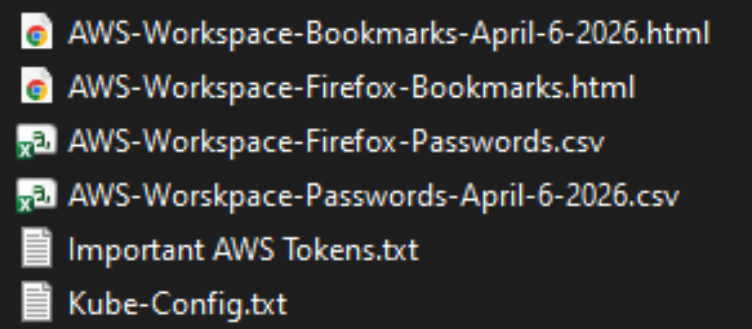
Cybersecurity & Infrastructure Security Agency (CISA) Data Leak Incident
A contractor exposed AWS GovCloud credentials and plaintext passwords on a public GitHub repository for over six months, disabling automate…
Tectonic Engine Overview and User Feedback
Tectonic reimagines TeX typesetting by fetching packages on demand, automating compilation, and ensuring reproducible PDFs without bulky La…