Huawei’s LogicFolding: A New Chip Design
Huawei’s announcement of its LogicFolding chip design marks a bold pivot amid intensifying US export restrictions targeting China’s semiconductor ambitions. Set to debut in the upcoming Kirin chip series this fall, LogicFolding promises a novel approach: stacking and folding multiple chip layers to squeeze more performance from existing manufacturing nodes. The concept aims to sidestep the bottlenecks of traditional scaling by rethinking chip architecture rather than chasing ever-smaller transistor sizes.
But the technical hurdles are steep. Folding silicon layers complicates heat dissipation and raises questions about yield rates in mass production. Huawei’s claim that LogicFolding could rival the performance of 1.4-nanometer process technology by 2031 sounds optimistic given the entrenched advantages of industry leaders like TSMC and Samsung. While this strategy may offer a path to improved efficiency under constrained conditions, it also underscores how geopolitical tensions are forcing Chinese firms to innovate around, not necessarily ahead of, global semiconductor roadmaps.
This move signals a renewed push by Huawei to reclaim ground against Apple’s chip dominance and challenge Nvidia’s foothold in China’s AI hardware market. Yet, the real test will be whether LogicFolding can scale reliably and economically, or if it remains a technically intriguing but commercially risky gambit.
Technical Details and Market Ambitions
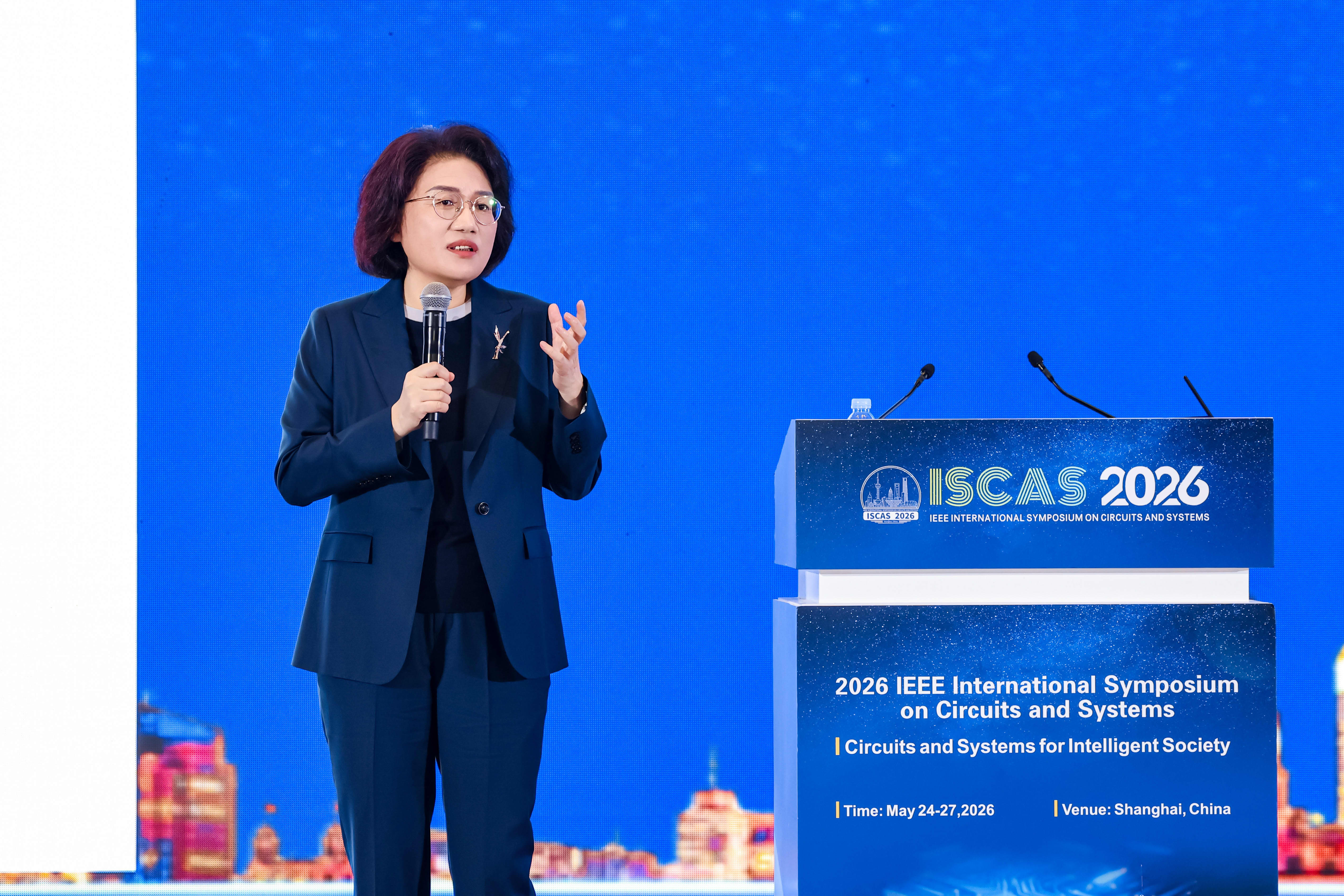
Huawei’s LogicFolding concept centers on a radical departure from traditional planar chip designs. By physically stacking and folding multiple logic layers within Kirin processors, the company aims to increase transistor density and shorten signal paths. This architectural innovation targets performance gains without relying on the latest extreme ultraviolet (EUV) lithography tools, which remain largely inaccessible due to US export controls. Announced in May 2026, Huawei plans to integrate LogicFolding into its upcoming Kirin chip generation, slated for release in the fall.
The folding technique promises efficiency improvements by reducing interconnect lengths, theoretically lowering power consumption and latency. However, this approach introduces significant thermal management challenges. Heat dissipation becomes more complex when active layers are stacked densely, risking hotspots that could degrade performance or chip longevity. Huawei acknowledges these hurdles but claims advances in cooling solutions and materials will mitigate such risks.
Manufacturing scalability also presents a critical obstacle. Fabricating folded logic layers demands precise alignment and bonding processes that are not yet proven at high volume. The company’s roadmap includes iterative refinements to meet yield and cost targets, but the path to mass production remains uncertain. Huawei’s projection that LogicFolding could rival the capabilities of 1.4-nanometer node technology by 2031 rests on optimistic assumptions about overcoming these technical barriers.
Market-wise, this innovation positions Huawei to challenge dominant players like Apple and Nvidia, especially within China’s strategic push for semiconductor self-reliance. Yet, skepticism persists among industry experts who highlight the gap between conceptual breakthroughs and commercial viability. Leading foundries such as TSMC continue to push more mature process nodes with well-understood scaling and ecosystem support. Huawei’s LogicFolding may offer a workaround under geopolitical constraints, but whether it can disrupt entrenched supply chains or deliver competitive performance at scale is still an open question.
Challenges and Expert Skepticism
Huawei’s LogicFolding concept ventures into territory that’s as technically ambitious as it is uncertain. The core idea of stacking and folding chip layers to enhance performance is not new—3D chip architectures have long promised gains in speed and efficiency—but the devil is in the details. Managing heat dissipation in such densely packed structures remains a formidable hurdle. As layers fold and stack, thermal hotspots can emerge, potentially throttling performance or damaging components. Huawei’s disclosures so far are sparse on how they plan to overcome these well-documented thermal challenges.
Manufacturing scalability is another question mark. LogicFolding’s complexity demands precision at the nanoscale, which is already a bottleneck for established foundries. Given the ongoing US export restrictions limiting Huawei’s access to cutting-edge lithography tools, replicating or surpassing the finesse of leading-edge nodes like TSMC’s 3nm or below seems optimistic. The claim of reaching 1.4-nanometer equivalent capabilities by 2031 hinges on breakthroughs not just in design but also in fabrication technology—an area where Huawei faces geopolitical and supply chain constraints.
Market-wise, the chip’s competitive impact is uncertain. While Huawei aims to challenge Apple and Nvidia in China, those incumbents benefit from mature ecosystems, extensive software optimization, and proven manufacturing pipelines. Huawei’s innovation may close some gaps, but catching up to the integrated hardware-software synergy of Apple’s silicon or the AI-optimized architectures of Nvidia will require more than architectural novelty.
Finally, the broader geopolitical context injects an added layer of risk. China’s semiconductor ambitions are under intense scrutiny, and any technology that appears to circumvent export controls may prompt further restrictions or retaliatory measures. This raises questions about Huawei’s ability to commercialize LogicFolding at scale without triggering new trade or supply chain disruptions. In short, while LogicFolding signals a bold strategic move, its technical and market viability remains shadowed by substantial engineering challenges and external pressures.
What This Means for Semiconductor Competition
Huawei’s LogicFolding chip design underscores a tense reality in semiconductor competition: innovation is now as much about navigating geopolitical barriers as it is about pure engineering advances. By stacking and folding chip layers, Huawei aims to sidestep US export restrictions and push performance boundaries without access to the latest fabrication nodes. Yet this approach carries inherent risks. Thermal management challenges and manufacturing complexity could slow mass production or limit yields, potentially undermining the promised efficiency gains.
From a market perspective, LogicFolding represents a strategic gambit rather than a guaranteed leap forward. It signals China’s determination to reduce reliance on foreign chipmakers, especially amid ongoing tech decoupling. But matching the process sophistication of industry leaders like TSMC or Samsung remains a steep climb—one that will test Huawei’s ability to scale and innovate under pressure. For competitors, this development may prompt recalibration: Apple and Nvidia face a more assertive rival in China’s domestic market, but the extent of LogicFolding’s impact depends heavily on execution and supply chain resilience.
In essence, Huawei’s move highlights a broader shift where chip design ingenuity must contend with supply constraints, export controls, and production realities. The semiconductor race is no longer just about who can make the smallest transistor—it’s about who can best navigate a fractured global ecosystem while delivering viable products. LogicFolding’s success or failure will offer a concrete case study on whether alternative chip architectures can effectively challenge established manufacturing paradigms in this new era.