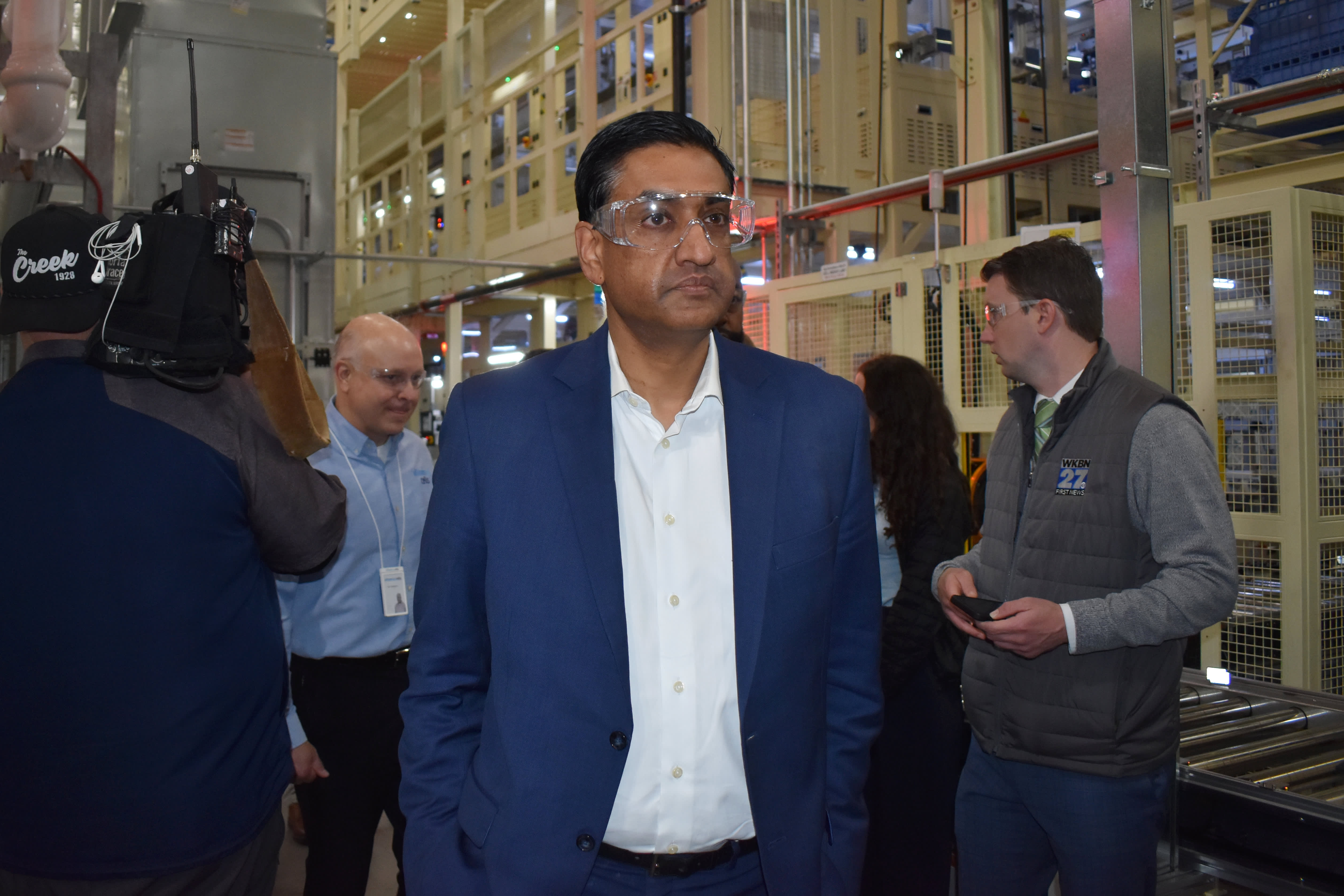
Khanna’s Vision for U.S. Manufacturing

Rep. Ro Khanna is pushing a bold shift in how the U.S. approaches manufacturing. His plan centers on creating a national industrial bank designed to funnel capital directly into critical industries—something the country hasn’t seen in decades. This isn’t just about money; it’s about reclaiming lost ground in manufacturing, especially in areas hit hardest by globalization and automation. Why now? Because China’s growing economic influence has exposed vulnerabilities in the American industrial base. Khanna’s proposal aims to reverse that trend by making strategic investments that boost domestic production and innovation. It’s a clear signal that economic patriotism, once a fringe idea, is gaining traction as a serious policy framework.

Details of the National Industrial Bank Proposal

The centerpiece of Rep. Ro Khanna’s plan is the creation of a national industrial bank designed to provide targeted financing for sectors critical to U.S. manufacturing revival. This institution would operate with a clear mandate: to fill the investment gaps left by private lenders, who often shy away from long-term, capital-intensive projects in manufacturing and infrastructure. Khanna proposes funding this bank through a combination of redirected defense spending and new revenue streams, including a novel "AI token tax." The idea is to tap into emerging digital economies to support traditional industries, blending innovation with industrial policy. This approach aims to ensure steady, reliable capital flow without relying solely on conventional government appropriations. The bank’s structure would resemble a public-private hybrid. It would leverage government backing to lower borrowing costs while encouraging private sector participation. This model draws inspiration from successful industrial banks in other countries, adapted to the unique challenges of the U.S. economy. The goal is to avoid the pitfalls of past industrial policy attempts, which often faltered due to bureaucratic inefficiency or political interference. Khanna has outlined a phased rollout beginning with pilot programs focused on the Rust Belt and other manufacturing hubs hit hardest by globalization and automation. Early efforts would prioritize funding for advanced manufacturing technologies, supply chain resilience, and workforce development initiatives, aiming to create sustainable jobs and regional economic growth. Introduced in May 2026, the proposal has sparked debate within Democratic circles. Some see it as a pragmatic shift toward economic nationalism that could broaden the party’s appeal in key swing states. Others worry about potential market distortions and the complexity of managing such an institution effectively. Khanna insists the bank would operate with transparency and accountability, governed by a board that includes industry experts, labor representatives, and public officials. While the national industrial bank is still a concept rather than a law, Khanna’s detailed framework sets a clear path for legislative action. Its success will hinge on navigating political hurdles and demonstrating tangible benefits to communities long sidelined in the global economy. The proposal challenges traditional economic thinking by marrying progressive values with industrial strategy, aiming to reshape the narrative around American manufacturing’s future.

Potential Effects on the Rust Belt and Beyond

The Rust Belt stands at the heart of Khanna’s plan, but the ripple effects could reach well beyond those Midwestern states. For decades, this region has wrestled with factory closures, job losses, and population decline. Injecting fresh capital through a national industrial bank could revive dormant plants and attract new industries, creating jobs where they’ve been scarce. That’s not just about economics; it’s about restoring community confidence and reversing decades of disinvestment. Yet, the stakes are high. The success of such a bank depends on careful targeting and management. Missteps could mean wasted funds or even reinforce existing inequalities if investments flow unevenly. Local governments and unions will need to be closely involved to ensure projects align with real workforce needs. The plan’s emphasis on tech-driven manufacturing might also require significant retraining efforts—jobs won’t simply reappear without a skilled labor force ready to fill them. Beyond the Rust Belt, the proposal could shift how Democrats approach economic policy nationwide. It signals a move away from purely service-oriented growth toward rebuilding industrial capacity. That might pressure other regions to rethink their economic strategies and attract manufacturing investment. For markets, this could mean new opportunities in sectors like clean energy, advanced materials, and AI-integrated production—areas Khanna’s bank aims to support. Still, political hurdles loom. Redirecting defense spending and introducing new taxes to fund the bank won’t be popular with everyone. The balance between innovation and protectionism will be tricky to maintain. If executed well, though, this approach could redefine economic patriotism, making it less about tariffs and more about strategic investment in American industry and workers. The question remains: can this vision translate into tangible revival, or will it get lost in partisan gridlock?

What This Means for Economic Policy and Voters

The core of Khanna’s plan boils down to this: if America wants to reclaim its manufacturing edge, it needs more than just tax breaks or trade tweaks. The national industrial bank isn’t a vague promise—it’s a targeted tool designed to funnel capital into sectors that have been starved for investment. That matters because private banks often shy away from the risks involved in revitalizing heavy industry or advanced manufacturing technologies. By stepping in, the government could unlock projects that otherwise wouldn’t get off the ground. For voters, especially those in regions like the Rust Belt, this proposal offers a concrete pathway to jobs and economic renewal. It’s not magic, though. Success depends on careful management and political will. Redirecting defense funds and introducing new taxes, such as the AI token tax, will raise eyebrows. People will want to know how these moves impact their wallets and national security priorities. Transparency and accountability will be crucial to maintain trust. On a broader scale, Khanna’s approach signals a shift in Democratic economic strategy—away from purely service-oriented growth toward rebuilding tangible industrial capacity. That could reshape how policymakers think about competitiveness in a global economy dominated by China’s manufacturing prowess. But it also raises questions about the limits of government intervention and how to balance innovation with economic nationalism. In short, this plan asks voters to consider a trade-off: accepting new fiscal policies now to potentially secure a manufacturing future that’s more resilient and domestically rooted. Whether it gains traction will depend on how well its promises translate into real-world outcomes and how voters weigh those outcomes against the costs. The conversation about economic patriotism is just beginning, but Khanna’s proposal puts a stake in the ground—one that demands attention and scrutiny.
Ссылка на первоисточник
Private payrolls grew by 122,000 in May, stronger than expected, ADP reports
Daily Money Brief

May 2026 Job Market Insights

Private payrolls rose by 122,000 in May, the strongest gain since early 2025. Eight of ten sectors expanded, led by education and health se…