Massive Data Breach Hits U.S. Education Sector
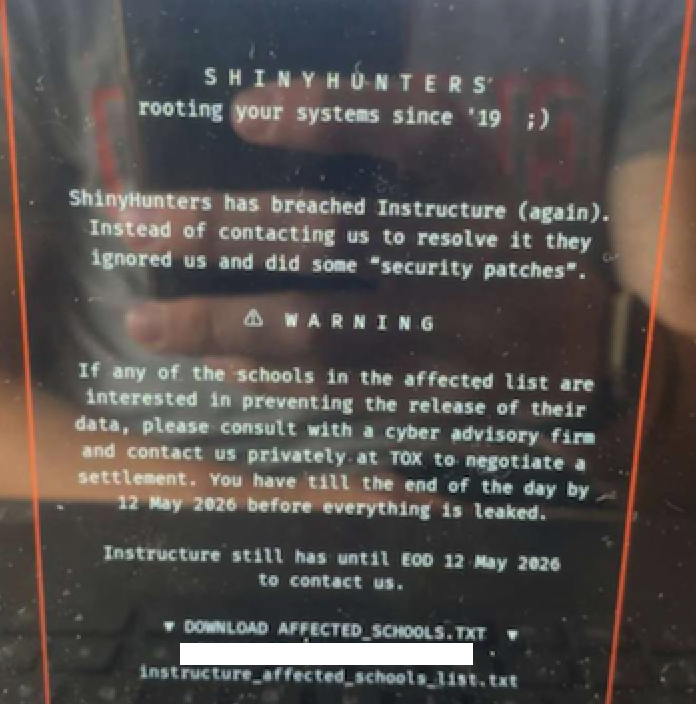
The ShinyHunters hacking group just exposed personal data of 275 million students and faculty in nearly 9,000 U.S. schools. This isn’t a minor slip—it’s a massive breach striking education technology at a critical moment. Canvas, the platform at the center, was taken offline as the fallout spread, leaving schools scrambling.
What stands out is how badly Instructure, Canvas’s parent company, misjudged the breach’s scale at first. This is their third attack by ShinyHunters in eight months. Repeated failures raise serious questions about Instructure’s cybersecurity and risk management. While passwords and financial data reportedly stayed safe, the leak of private messages and personal identifiers still exposes students and educators to long-term privacy risks.
Repeated Attacks by ShinyHunters Expose Security Gaps
ShinyHunters struck again, marking their third breach of Instructure’s defenses in less than a year. This pattern isn’t random—it reveals persistent security flaws in Canvas’s infrastructure. The May 2026 attack compromised data on 275 million students and faculty across nearly 9,000 schools, dwarfing previous incidents. Yet Instructure initially downplayed the breach, delaying containment efforts.
The hackers exploited vulnerabilities that should have been patched after earlier attacks. Instead, gaps stayed open long enough for ShinyHunters to return and cause more damage. Passwords and financial info were reportedly untouched, but the leak of personal identifiers and private communications can fuel identity theft and targeted phishing—especially dangerous in education.
Instructure’s decision to take Canvas offline came under pressure, not as a proactive defense. The downtime disrupted schools nationwide during a critical academic period, showing the real-world fallout from cybersecurity lapses. Each breach reveals systemic flaws, not isolated mistakes. ShinyHunters’ persistence exposes a security posture that hasn’t kept pace with evolving threats. Patching known holes isn’t enough; continuous, rigorous defense is essential.
Instructure’s Response and Timeline of Events
Instructure first flagged unusual activity on Canvas in early May 2026. At first, they suggested a limited breach affecting a small user subset. That quickly unraveled as investigations showed a far broader compromise. Within days, Canvas was taken offline nationwide, disrupting classes and administration across nearly 9,000 schools.
The timeline reveals reactive moves over proactive containment. Instructure confirmed unauthorized access by ShinyHunters—a group known for previous attacks on their infrastructure. This wasn’t a one-off event but the third major intrusion by the same group in eight months. Each incident exposed cybersecurity gaps that went unaddressed.
Though passwords and financial data reportedly remained secure, the breach exposed sensitive personal details and private communications of roughly 275 million students and faculty. The scale forced a rethink of how Instructure monitors and defends its systems. Their delayed acknowledgment and nationwide outage highlight the challenges of securing large education technology platforms.
Privacy Risks and Operational Challenges
The breach’s fallout goes beyond stolen data. For schools and universities, the immediate problem is operational chaos. Canvas is a backbone platform—when it’s offline, classes stop, assignments stall, and communication breaks down. This disruption during active terms strains educators and students, forcing rushed workarounds that risk data integrity and continuity.
Privacy risks run deeper. Even without financial data compromised, leaked private messages and personal identifiers open doors to identity theft, phishing, and long-term reputational damage. Students and faculty face heightened risks, but many institutions lack resources for comprehensive support or monitoring post-breach.
Repeated breaches erode trust in Instructure. Customers demand stronger safeguards and transparency, but the company’s slow admission of the breach’s scale suggests a disconnect between risk assessment and reality. This complicates recovery and fuels skepticism about platform security.
The education sector faces a tough balance. Digital adoption improved access but expanded attack surfaces. Institutions must weigh rapid digital transformation against persistent vulnerabilities. Budget constraints and fragmented IT make systemic upgrades hard, leaving schools exposed.
Policy-wise, this breach exposes patchy cybersecurity standards in education. Unlike finance or healthcare, the sector lacks uniform regulations or enforcement to mandate baseline protections. This incident may pressure lawmakers to reconsider oversight and funding, but any changes will take time—time during which student data remains vulnerable.
Future Security Measures and Industry Impact

The Canvas breach’s impact will hinge on responses. Instructure faces pressure to overhaul its security architecture—patchwork fixes won’t suffice. Watch whether they adopt stronger threat detection and incident response. ShinyHunters’ repeated intrusions suggest systemic weaknesses beyond a single flaw.
Regulators will likely increase scrutiny on edtech platforms, pushing for stricter compliance and transparency around breaches. New guidance or mandates to protect student data seem probable. How fast and thorough these rules emerge will reveal the sector’s readiness for cyber threats.
Schools and districts must rethink reliance on third-party platforms. This breach exposes risks of centralized data repositories holding millions of records. Some may push toward decentralized or zero-trust models, but these shifts are complex and costly. The question is whether education can adapt fast enough without losing functionality.
The broader cybersecurity community will watch how threat actors evolve. ShinyHunters’ persistence signals education tech is a lucrative target. The next signs to watch: similar breaches hitting other platforms and how quickly organizations detect and contain attacks. The Canvas breach reminds us that technology and education remain a fragile battleground.
Global Digests News delivers timely, credible coverage of world affairs, politics, economy, and technology to keep you informed on today’s top stories.